Hey everybody, welcome to Retell Seller, an ephemera podcast where I uncover forgotten stories and the ephemera people leave behind. I’m Angie, a reseller of 10 years, and I’ll share one of those snippets with you. Let’s see what today’s find has to say
Please know some links in this post are affiliate links. If you click on a link and make a purchase, I may receive a small commission with no extra cost to you. Thank you. Click here for my full disclosure.
Just a couple of episodes ago, I read from a postcard where the focus wasn’t really on the message written by the sender. It was about the verse printed on the front. One by Ella Wheeler Wilcox.
This time, it’s ALL about what the sender wrote and later I’ll talk about the verse. It’s the fact the writer included things which probably felt inconsequential at the time. Yet, 117 years later, here we are pulling information to trace back, verify, and step for a moment into what life looked like at the time.
Not better. Not worse. Just different.
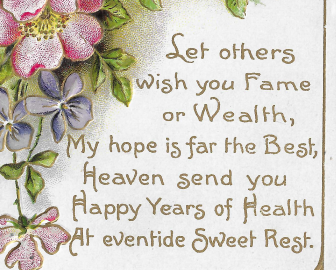
The postcard itself is portrait style. The front has raised purple-blue and pink flowers, with gold ornate framing angled through the design. Inside that floral frame is a short verse.

It reads:
“Let others wish you Fame or Wealth,
My hope is far the Best,
Heaven send you Happy Years of Health
At eventide Sweet Rest.”
And then you turn the card over, and the handwritten sentiment gives way to something more specific.
The card is postmarked Evansville, Indiana. The date of the postmark looks like June 2, 1909, but the handwritten date, before the message, begins June 11, 1909. So I do wonder if the postmark may have been June 12, a day later, and only the 2 transferred clearly but, I can’t be sure, but the dates don’t line up otherwise.
The message says:
“Dear cousins:
The weather here is hot & it’s pretty soon harvest. The street car men are on a strike here for 2 weeks already, so I walk.
Will write later.”
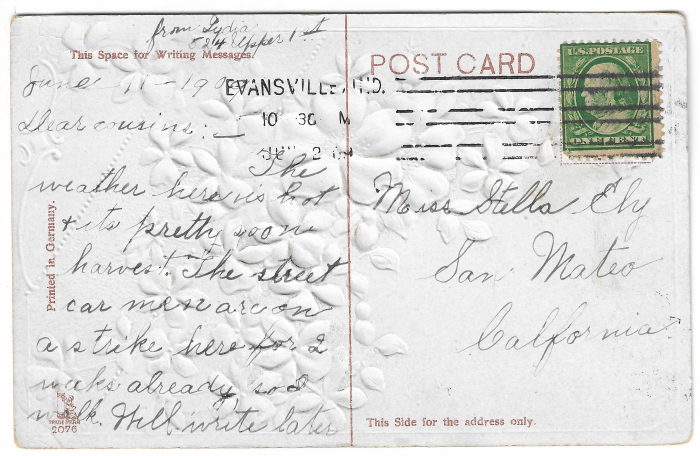
At the top of the message side, squeezed in just above where the postcard says “space for writing messages,” it reads:
“From Lydia, 524 Upper 1st.”

I think it looks like it was a last-minute addition before the card was sent. Just a name and an address, pushed into the top margin.
I looked up 524 Upper 1st in Evansville, and it brought me to a site about Historic Evansville and street numbering. The city, founded in 1812, didn’t have numbered street addresses with earlier homes being described by location, like “southwest side of Elm and Maple.” But in 1873, Evansville adopted a more formal numbering system.
And in the examples on this page I brought up, one stood out. It said the Reitz Museum, on First Street at the corner of Chestnut, was originally 524 Upper 1st Street…the address Lydia squeezed in at the top of the postcard.
The Reitz Home was built in 1871 for John Augustus Reitz and his family. It’s described as one of the country’s finest examples of French Second Empire architecture. John Reitz was born in Prussia in 1815 and came to the United States in 1836, at the age of 21. He and his wife, Gertrude, would go on to have ten children.
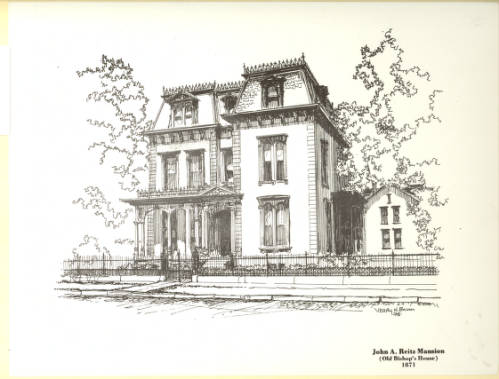
He was one of those men whose name seemed to be attached to almost every kind of civic and business role you can imagine: entrepreneur, banker, industrialist, philanthropist, civic leader. But, of course he didn’t start there.
When he first came to the U.S. he wanted to start a pottery business which didn’t end up taking off, so he found work in a sawmill. He learned the business and eventually established his own company along Pigeon Creek in 1856, becoming known as the “Lumber Baron”.
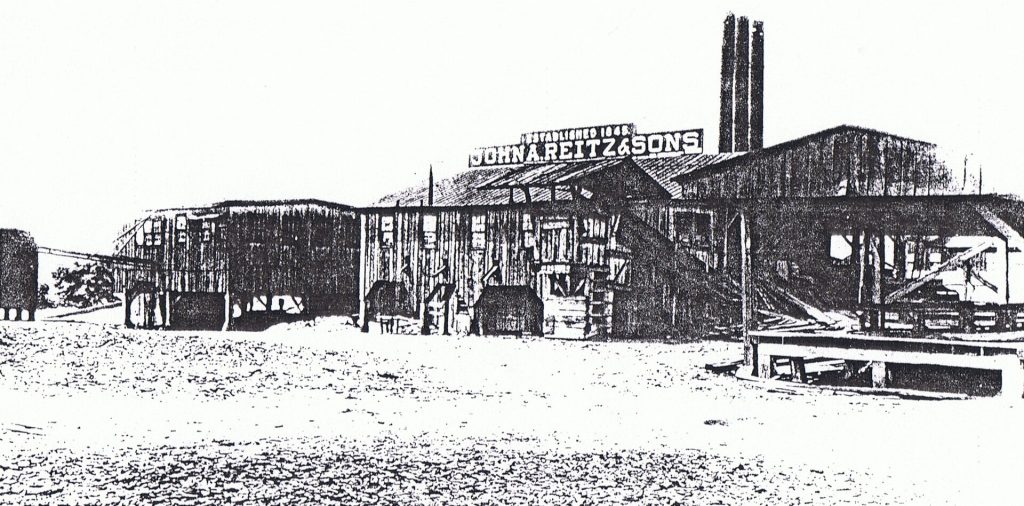
And the old newspaper clippings I found, back that up connecting him to a part of the working machinery of the city.
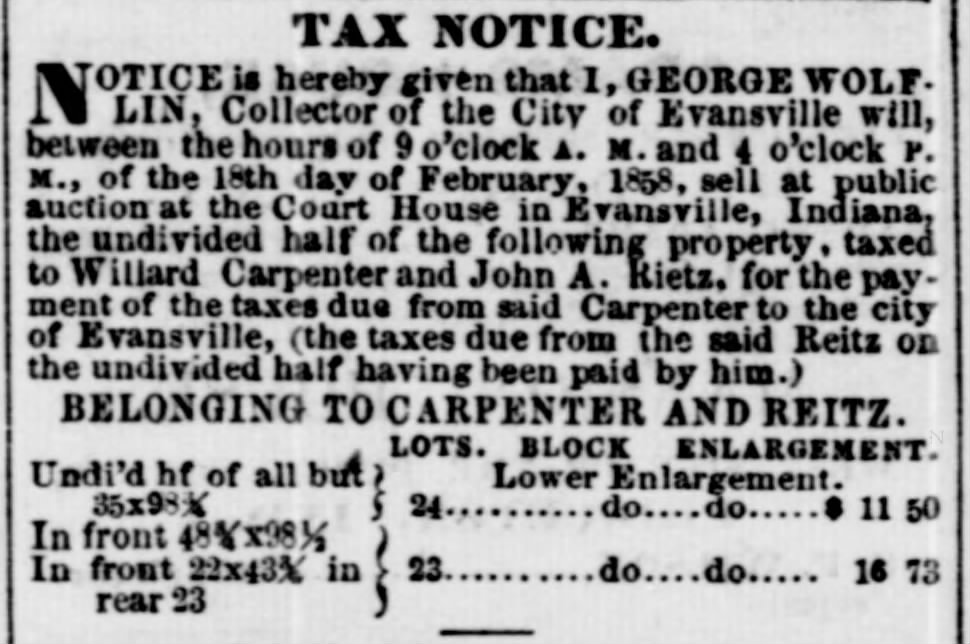
In 1858, under tax notices, Reitz’s name appears tied to property in Evansville in which he shared with a guy named Carpenter. Reitz paid his portion of taxes and Carpenter didn’t so, Carpenter’s half of the property was put up for auction.
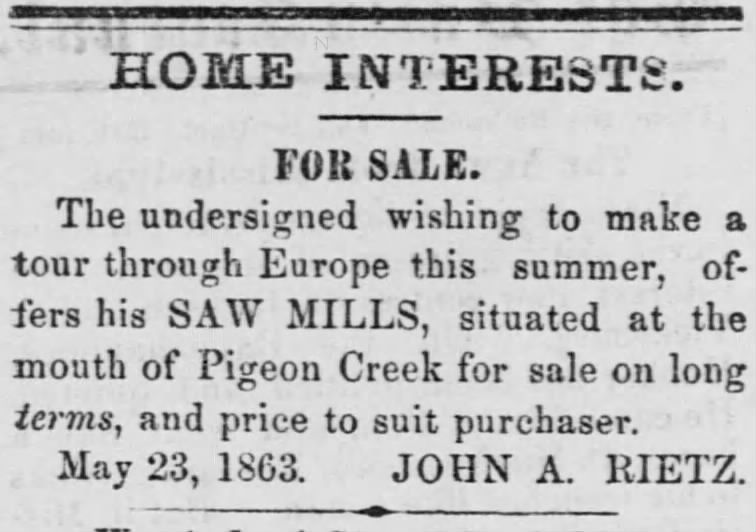
Another interesting one I found from 1863, just 7 years after opening the sawmill, shows Reitz offering his sawmills for sale because he wished to make a tour through Europe that summer.
In 1882, bids for lumber were opened and John A. Reitz and Son bid on oak lumber at $1.20 per hundred feet and poplar at $1.30 per hundred and they were awarded the contract for the lower district.
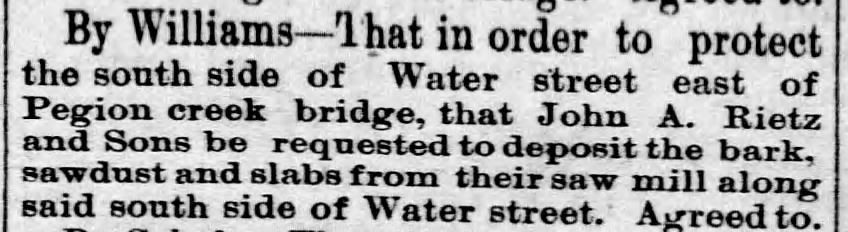
In another clipping from 1883, the city requested that John A. Reitz and Sons deposit bark, sawdust, and slabs from their sawmill along Water Street to help protect the south side near the Pigeon Creek bridge.
Over time, working in lumber turned into much more. By the later part of his life, he had built up significant wealth. The kind of wealth that went beyond just supporting his family. Charities, churches, educational organizations all benefited from his monetary gifts.
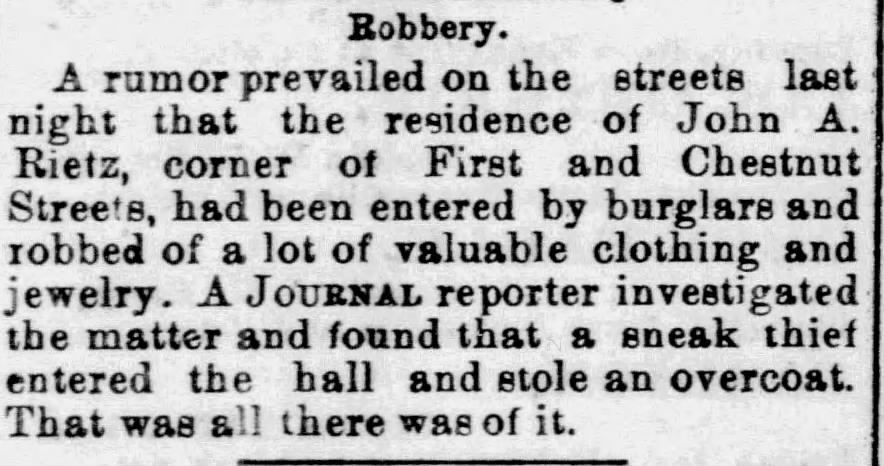
I came across another couple of articles reporting pretty much the same thing about a rash of robberies in 1878 in which overcoats were being reported stolen. With one of them being John Reitz, the article says, “A rumor prevailed on the streets last night that the residence of John A. Reitz, corner of First and Chestnut Streets, had been entered by burglars and robbed of a lot of valuable clothing and jewelry. A JOURNAL reporter investigated the matter and found that a sneak thief entered the hall and stole an overcoat. That was all there was of that.”
Which brings me back to Lydia. Who was she? Why was she writing from 524 Upper 1st? Was this the general area in which she lived? Was she employed by the family? As of right now, I don’t have those answers.
But I think the message itself definitely matters. Especially in comparison to the Reitz family.
Because Lydia doesn’t sound like someone complaining about a citywide inconvenience. She sounds like someone living inside it.
“The street car men are on a strike here for 2 weeks already, so I walk.”
The line is so plain. No big explanation. No opinions on the matter. Just the necessity of having to walk.
And the clippings I found make clear this was not some tiny inconvenience.
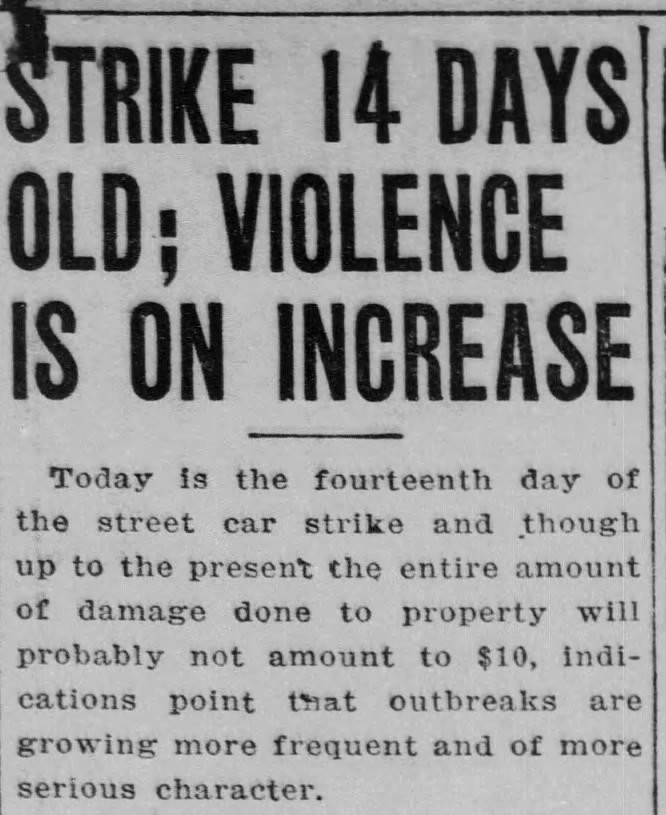
An article from the very day Lydia wrote this note, is titled, “Strike 14 days old; Violence is on increase.” There were reports of railroad torpedoes being found on tracks, rocks thrown at cars, a man being hit with a brick.
Free Trial
It also stated the streetcar company was operating at about 30 percent of its normal business. So the city wasn’t completely stopped, but it was disrupted enough that people had to find other ways to move through the city.
And people did.
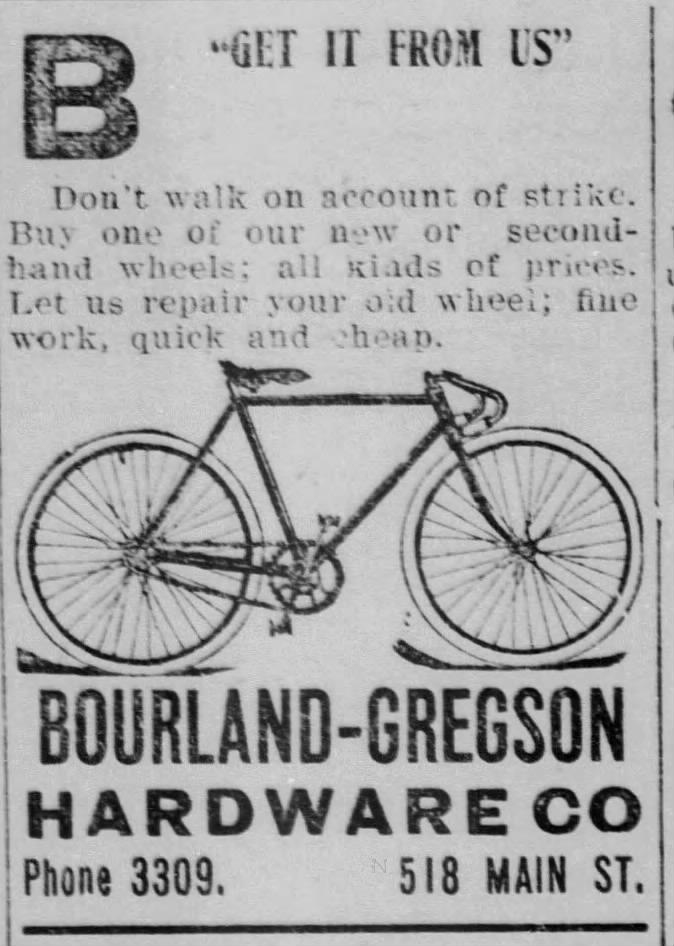
A hardware company ran an ad that said, “Don’t walk on account of strike. Buy one of our new or second-hand wheels.” They were selling bicycles to help solve the problem.
Free Trial
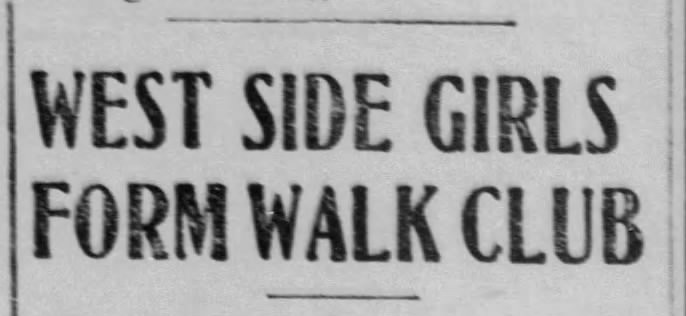
As a result of the strikes, walking clubs were created and an article titled, “West Side Girls Form Walk Club”. These were people who worked in uptown stores and factories. It talks about how they hadn’t forgotten the kindness shown to them by conductors before the strike, promising the men they would walk as soon as they left the cars.
Free Trial
Not only Lydia had to adjust but, the entire city had to.
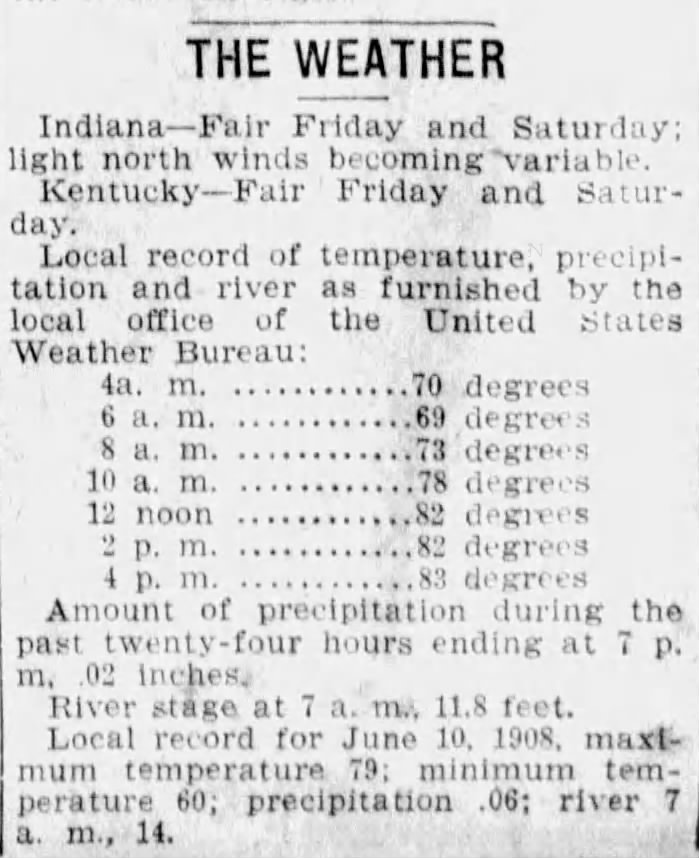
She mentioned that it’s hot and I imagine it means more now since she has to walk. And the newspaper backs that up, too. On June 11, 1909 weather shows temperatures starting around 70 degrees at 4 a.m., rising to 78 by 10, 82 at noon, and 83 by 4 p.m.
Free Trial
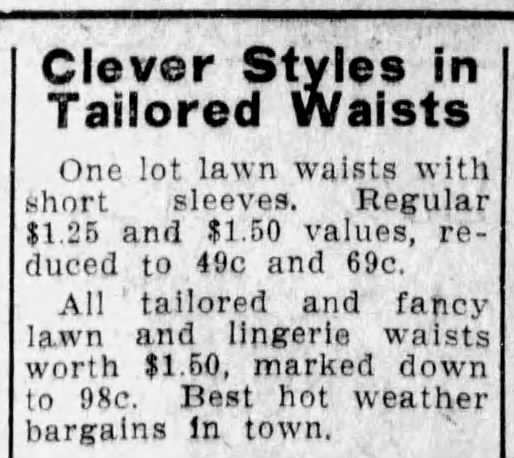
Another advertisement for tailored waists called them the “best hot weather bargains in town.” Stores were selling for the heat. People were dressing for the heat. Lydia was walking in the heat.
This postcard as it is, says what’s on one person’s mind but, separating everything out and, in some ways, connecting it back together gives a much bigger story.
On the one side, you have the Reitz name associated with lumber which helped build a city, wealth which helped build schools, a grand house turned museum.
On the other side, you have Lydia who wrote a postcard. She wasn’t trying to preserve history. She wasn’t trying to explain labor unrest. She wasn’t trying to leave any clues behind. She was just writing to her cousins.
I think the sentiment on the front of the card matches the character I saw in Lydia’s writing.
Let other wish you Fame or Wealth – she’s dismissing outward success in favor of a quiet existence
My hope is far the Best – not competitive but, re-framing what matters
Heaven send you Happy Years of Health
At eventide Sweet Rest – not just living well but, ending the day, even life in peace
She had no idea 117 years later someone would be reading that postcard while others listen in.
I hope she wouldn’t mind.
Thank you for joining me as I shared a snippet of the past. I’d love to know if it connected with you in some way. Did it spark a memory or make you see something differently? If so, consider sharing it. Be sure to check out the show notes for additional info, links, and ways to connect. It’s not nostalgia, it’s human. Until next time, may you find something worth holding onto.
Thank you for coming along with me & if interested, consider signing up for the Newsletter.
DISCLAIMER: The content on this site is for storytelling purposes only.
ADDITIONAL LINKS & INFO
- https://historicevansville.com/numbering.php
- https://www.reitzhome.com/
- https://digital.evpl.org/digital/collection/evaphotos/id/156/rec/2
- https://en.wikipedia.org/wiki/John_Augustus_Reitz
pinny please