This episode touches on subjects some listeners may find difficult to hear.
Hey everybody, welcome to Retell Seller, an ephemera podcast where I uncover forgotten stories and the ephemera people leave behind. I’m Angie, a reseller of 10 years, and I’ll share one of those snippets with you. Let’s see what today’s find has to say
Please know some links in this post are affiliate links. If you click on a link and make a purchase, I may receive a small commission with no extra cost to you. Thank you. Click here for my full disclosure.
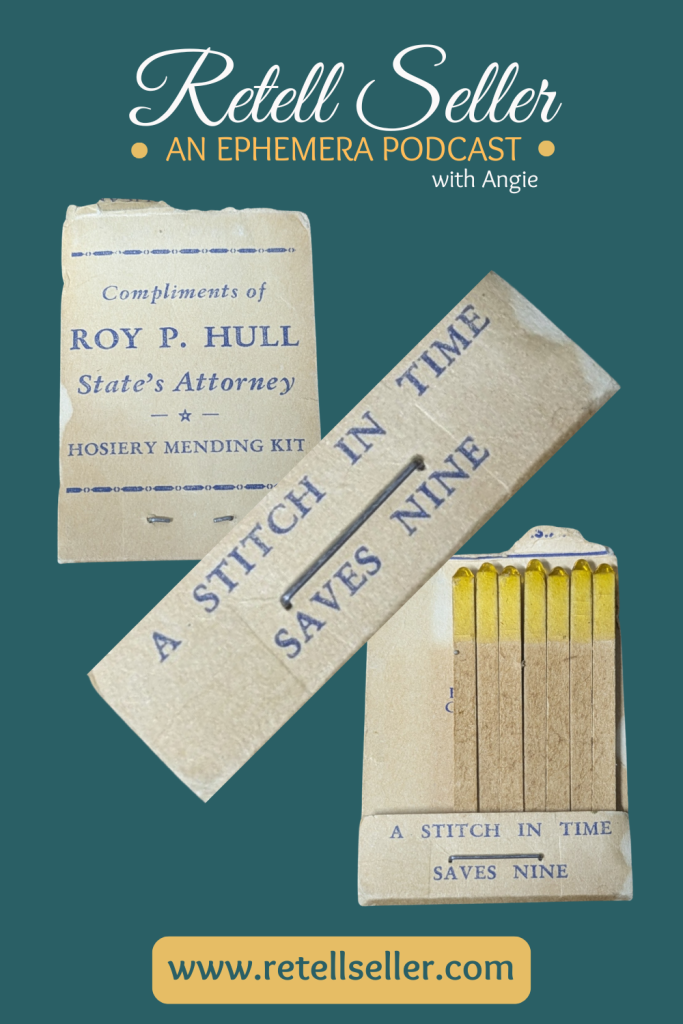
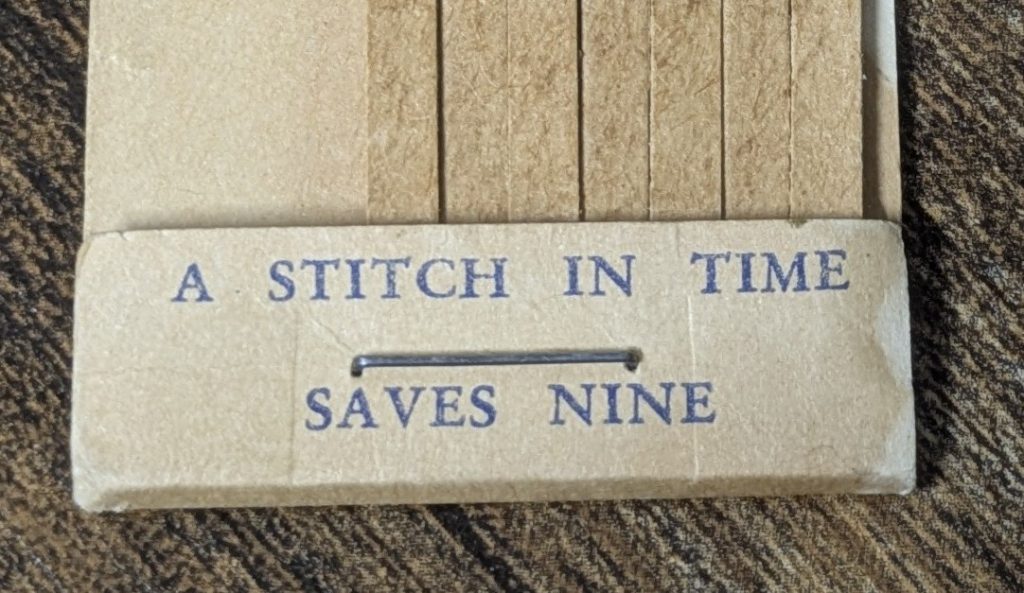
This story starts with something very small, a two-inch by one-and-a-half-inch hosiery mending kit. I’d purchased a hat box full of ephemera, and this was inside. It’s made to look like a book of matches. Unfortunately, the top flap was torn off and is long gone.
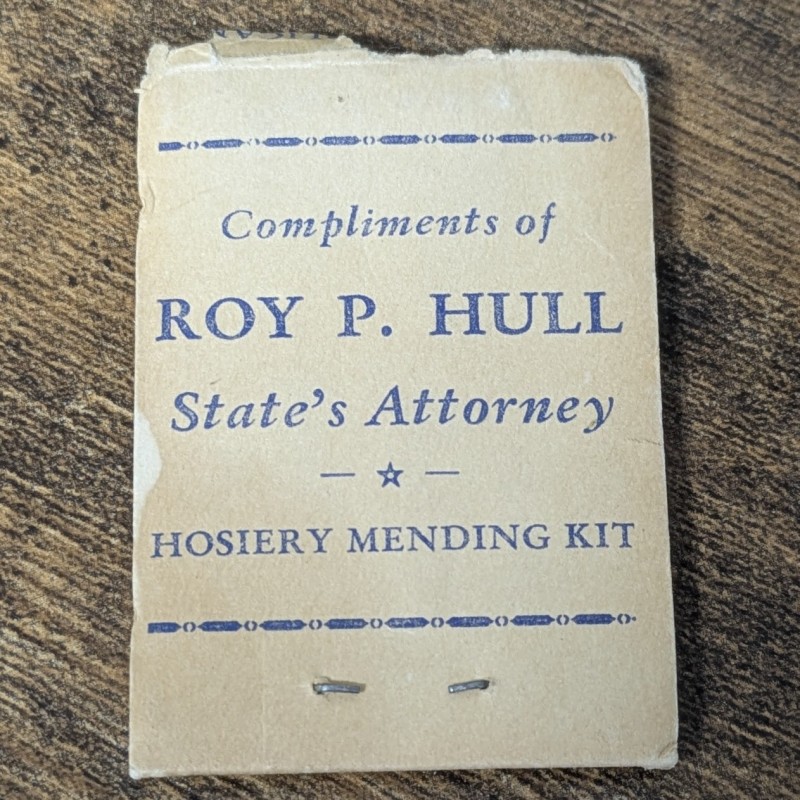
There are seven thin cardboard-wrapped needles with yellow resin tops made to look like matches. Based on the dimensions and width of each, there would have most likely originally been 11. On the front or main side, it says, “Compliments of Roy P. Hull, State’s Attorney, Hosiery Mending Kit.”
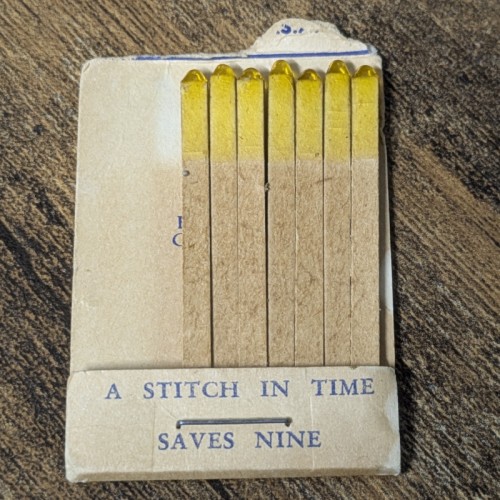
And I’m not sure what to call this area, but the part covering the needles, which the flap would have tucked into, says “A Stitch In Time Saves Nine.” And this is obviously a way to advertise and is very fitting for the time.
I started with familysearch.org, which is not a subscription site, but it does require you to create an account.
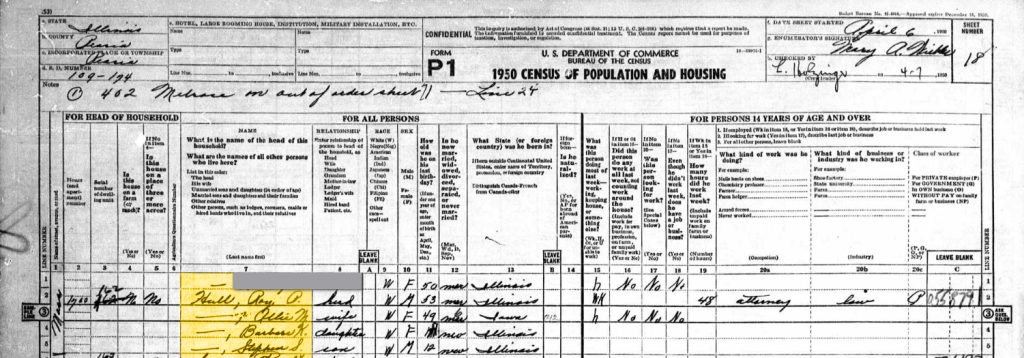
I found Roy’s name on the 1950 census out of Peoria County, Illinois. He’s listed as head of household and being 53 years old. Which would make his birth year 1897. It says his occupation was attorney. His wife’s name was Alice, and he had a daughter, Barbara, and son, Steven.
Even though I was fairly confident this was the correct Roy Hull, I eventually came across another site mentioning him. It was written in 2020 and was about a student by the name of Flavel Fueger, who in 1947 was murdered.
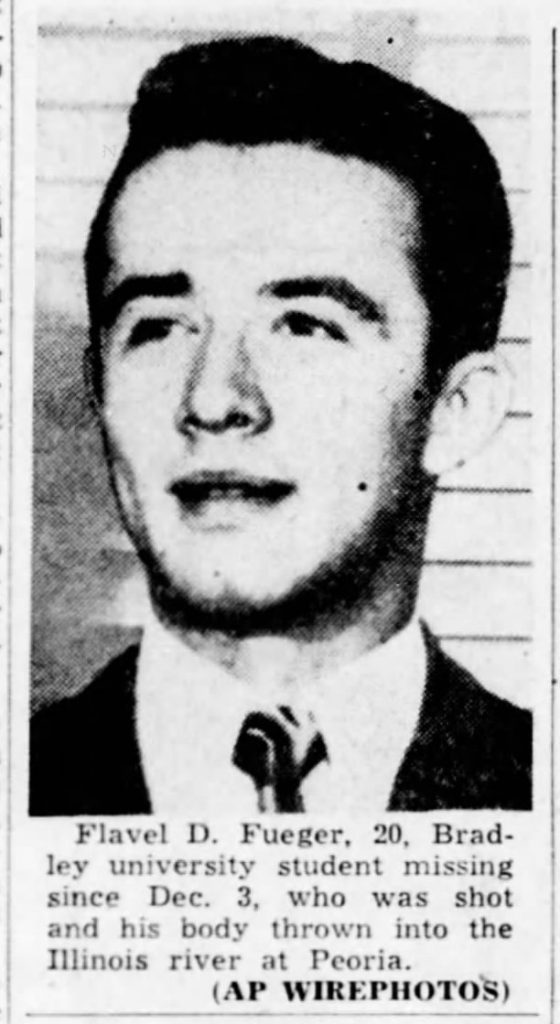
He was attending Bradley University in Peoria, Illinois at the time, and he was on his way to meet his girlfriend when he was approached at a stoplight by a man who wanted his car. The man ended up shooting Flavel and dumping his body in the Illinois River.
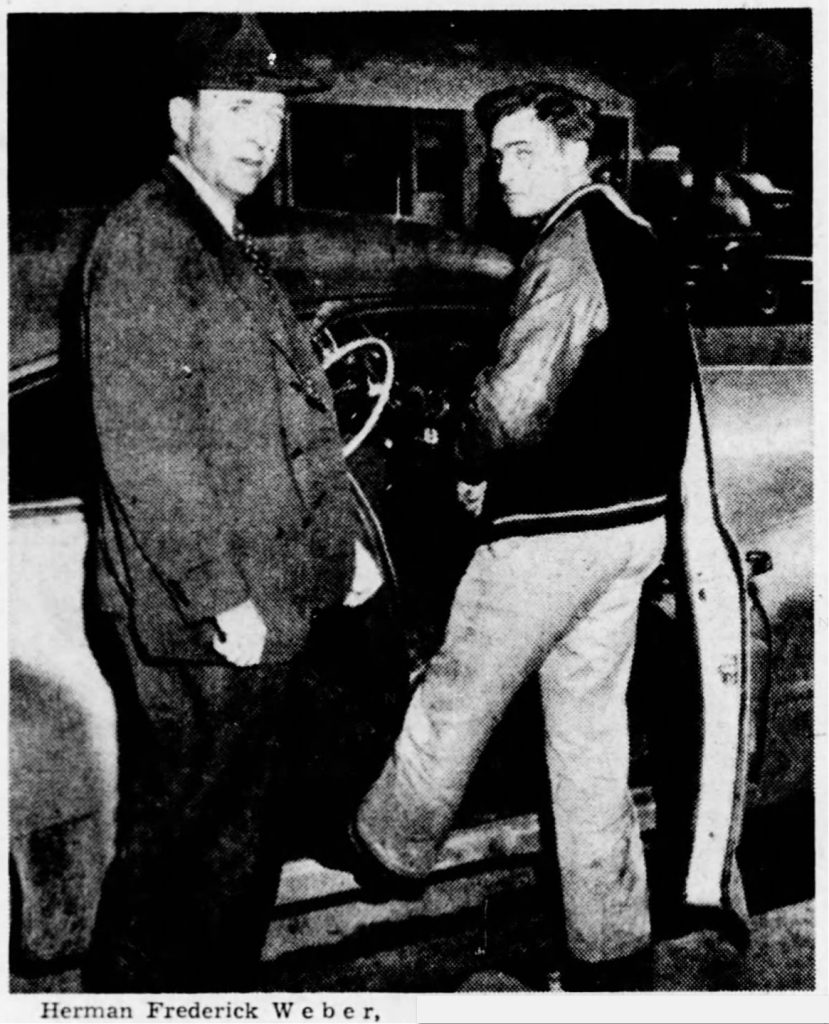
He was found two weeks later in a drainage ditch. In the end, Herman Frederick Weber was found guilty and sentenced to death by electric chair on September 16th, 1949. Back then, Flavel’s parents wanted to give State’s Attorney Roy P. Hull a gift of appreciation.
Free Trial
They knew Roy had a 10 year old son named Steven and hoped he’d enjoy Flavel’s childhood wooden and ceramic toy animals. Roy’s son kept the toys his entire life, and when this 2020 story was written, it was Steven’s daughter, Roy P. Hull’s granddaughter, who came across them.
Steven was 82 at the time, and they wanted to return the toys to Flavel’s family. And as a result of having seen the story, a relative of Flavel’s reached out, and they did receive the toys back.\
And just a note, I’ll share two links to this same story from different online sources. But, if you’re not a subscriber, each will only allow you to view the story once, so just be aware of that.
Uh, once I saw Steven as being the son of Roy, I knew the census I had found was correct.
I was able to find numerous stories of Roy, and throughout he was reported as being an attorney to an assistant state’s attorney to state’s attorney and back.
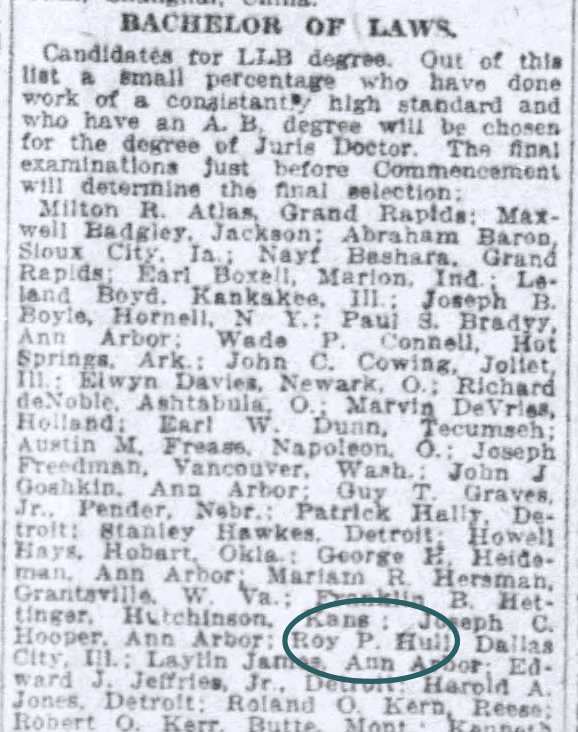
I came across an article from 1923 listing University of Michigan graduates and under Bachelor of Law, Roy’s name was listed.
My last episode on the gripp, a.k.a. influenza, showed how back in the day, the news revolved around what everyday citizens were going through, whether sickness or visiting relatives, and I found the same thing here.
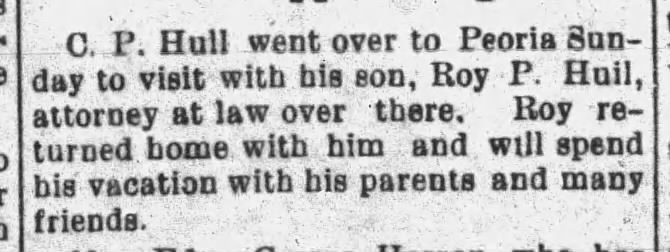
In 1926, the Dallas City Review out of Dallas, Illinois, reported C.P. Hull went over to Peoria Sunday to visit with his son, Roy P. Hull, attorney at law over there. Roy returned home with him and will spend his vacation with his parents and many friends.
Free Trial
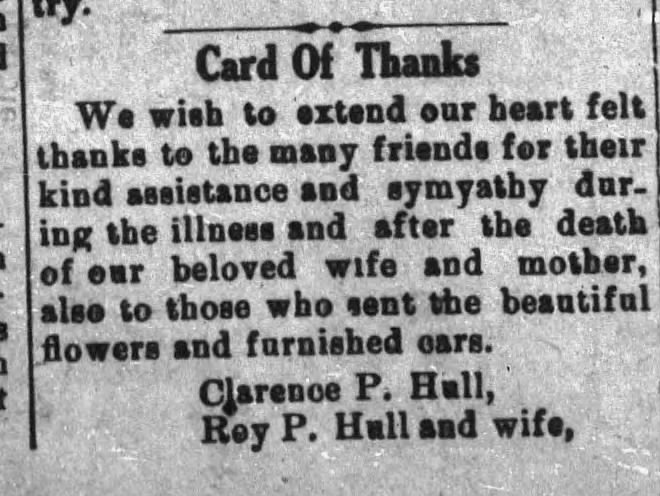
Three years later, I found a piece in the paper titled Card of Thanks, where Roy and his father, Clarence, were thanking everyone for the kindness and sympathy the community showed them during the illness and after the death of Mrs. Clarence Hull.
Free Trial
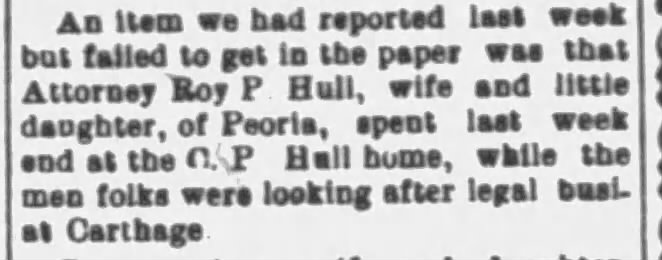
Later that year, the paper posted, quote, “An item we had reported last week but failed to get in the paper was that Attorney Roy P. Hull, wife, and little daughter of Peoria spent last weekend at the C.P. Hull home while the men folks were looking after legal business at Carthage.”
Free Trial
I even found an article trying to collect money for their subscriptions, and they posted the names of those who were paid up, with Roy being one of them.
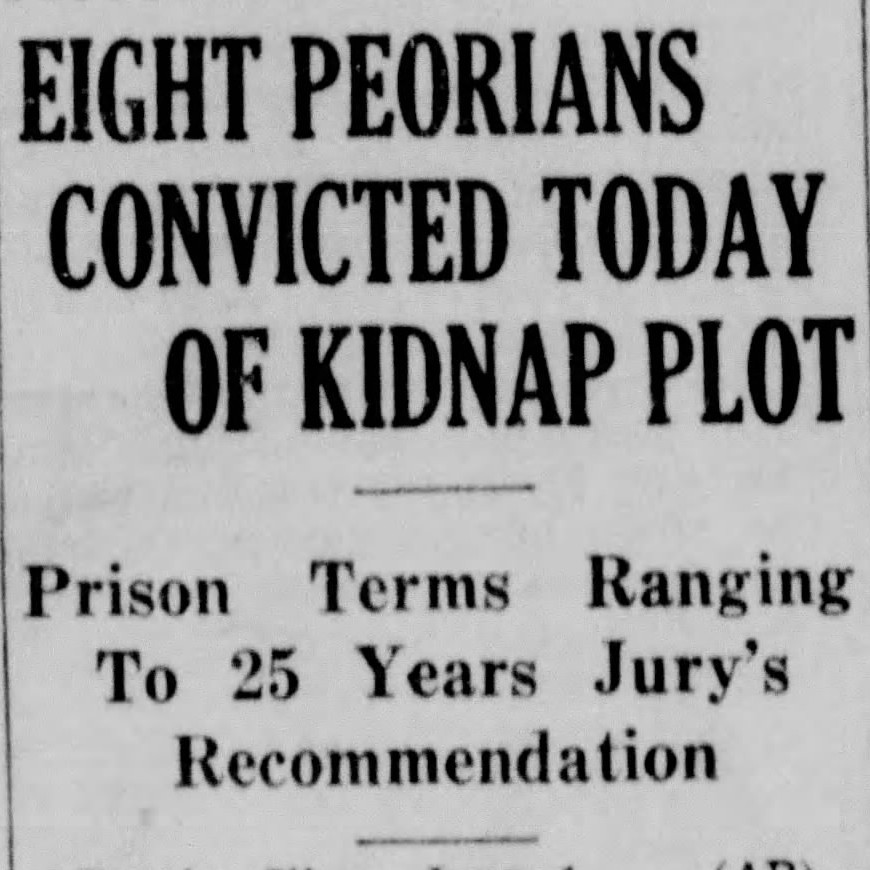
In 1932, an article listed Roy as assistant state’s attorney, and he had a case where eight people were convicted of a kidnapping involving a prominent local doctor who was returned home safely. And out of the eight was a former candidate for mayor, James W. Betson, and attorney Joseph H. Perciful, once a candidate for state’s attorney
Free Trial
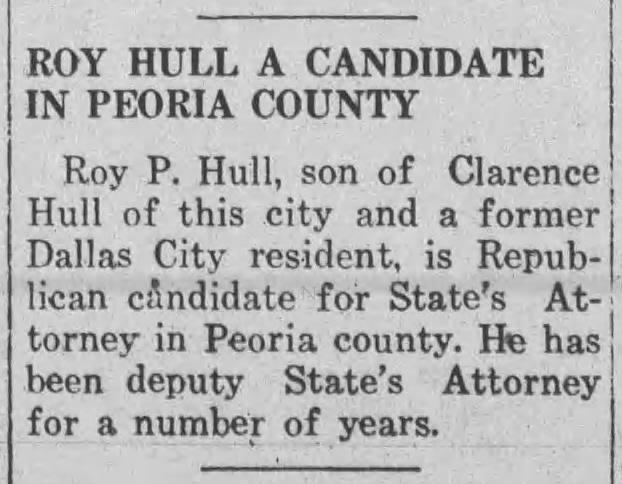
In 1944, a snippet says Roy P. Hull was the Republican candidate for state’s attorney in Peoria.
Free Trial
And I couldn’t find a conclusion for this one, but in June of 1946, Roy investigated the death of Michael Duzalka, a coal miner, a World War I vet, who had been admitted into the Bartonville State Psychiatric Hospital, dying only six hours after arriving.
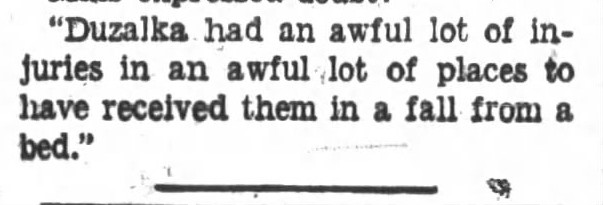
He died of an internal hemorrhage due to fractured ribs having pierced his liver. He had lots of cuts and bruises and a fractured finger. The attendants said his injuries came from a fall from bed, to which the Logan County state’s attorney said, quote, “Duzalka had an awful lot of injuries in an awful lot of places to have received them in a fall from a bed.
Free Trial
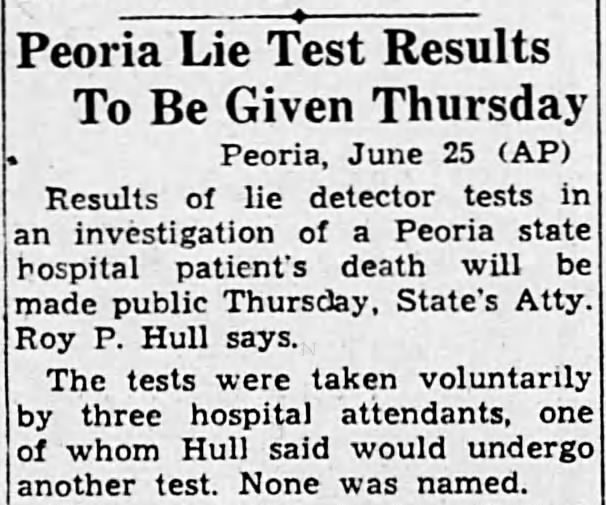
The three attendants voluntarily took lie detector tests and when the results came in Hull reported one of them would need to be taken again.
Free Trial
I’ll also share a link to a podcast on the state hospital called “Stories From the Bowen Building”, which was just a short series of seven episodes where they spoke with staff from the hospital, museum directors, and historians, and it was really good, so I’ll leave that link.
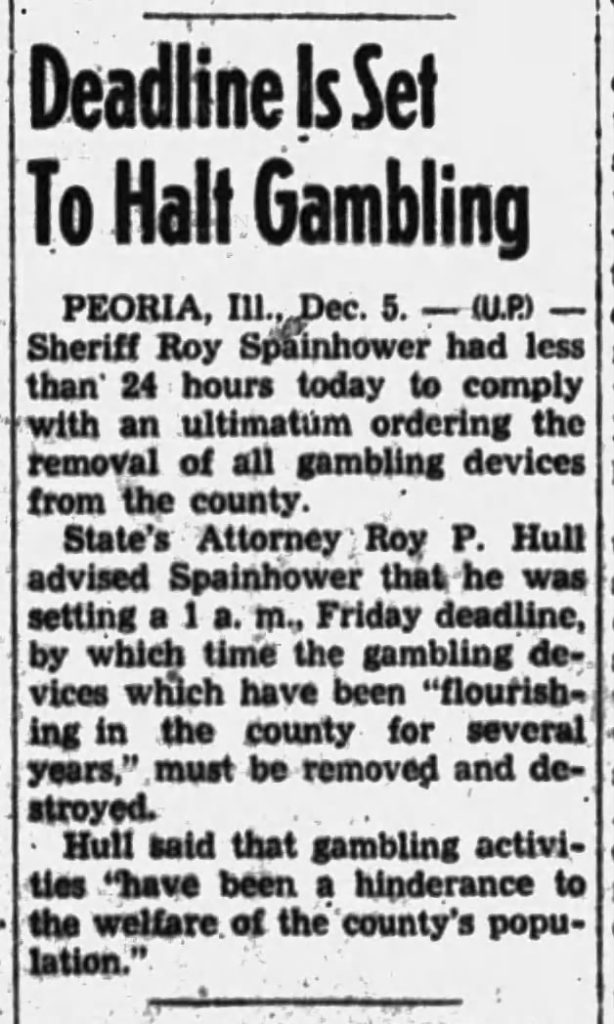
Roy was also involved with the removal of gambling machines throughout the county in 1946. He said they, “Have been a hindrance to the welfare of the county’s population.” No worries, by 2011, they were placed right back on every street corner practically so, sorry Roy.
Up to this point, we’ve known Roy P. Hall to be a son, a husband, father, attorney, assistant state’s attorney, and state’s attorney.
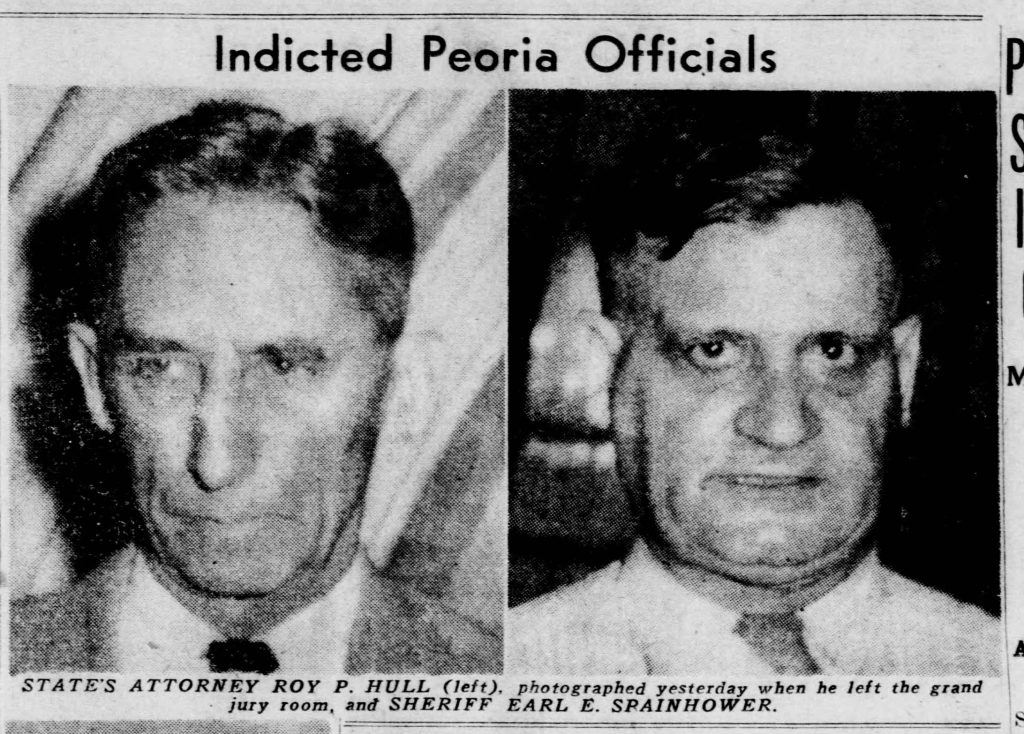
In 1948, however, he was charged with bribery stemming from allegations that a $25,000 bribe had been solicited from gangster Bernie Shelton. If you’ve not heard of the Shelton gang, I’ll share a bit about them. However, many stories of them are out there from websites, books, podcasts, et cetera, And will do a much better, more thorough job than me, so I’ll share those links as well, and it’s an interesting story for sure.
Free Trial
But the Shelton brothers, Carl, Earl, and Bernie, first made their name in Southern Illinois during Prohibition. Unable and/or uninterested in making the money they needed, by being farmers, which their family struggled with, they would try getting money in any other ways they could, through bootlegging, gambling, prostitution houses.
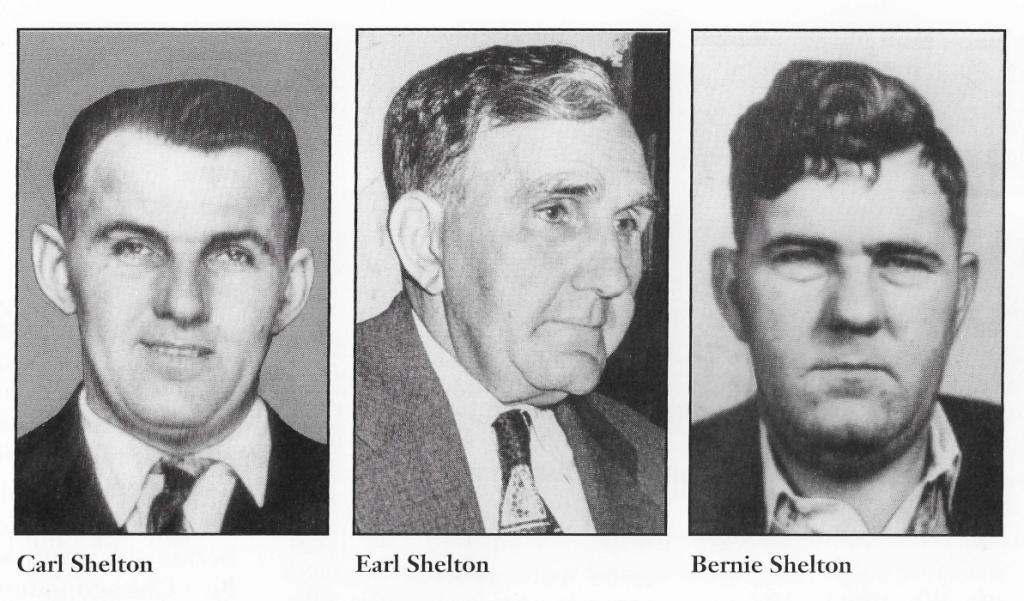
Through these, they were able to take care of their families and their community, which in their hometown area specifically was welcomed. They had rivals, with one gang being led by Charlie Birger.
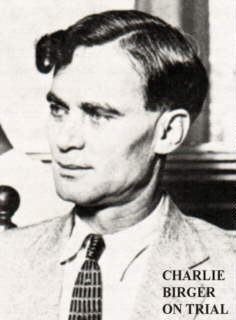
Wars were fought, taverns were blown up, associates killed, and eventually the Sheltons were driven out of the area, which brought them to Central Illinois.
They didn’t have as much trouble in Peoria maybe as they did when they were in Southern Illinois, but they had lived a life that made them feared as well as targets. Earl Shelton had a few attempts on his life, but he ended up moving to Florida, where he lived into his nineties, dying in 1986.
Carl Shelton was murdered on his farm in Fairfield, Illinois in 1947, and the following year his brother Bernie would be shot outside of his club in Peoria.
The investigation into the bribery case against Hull was sparked by Shelton’s murder. His death led to public controversy and multiple indictments involving public officials, reporters, and associates. A short time before Bernie was shot, he had recorded a conversation with a man who claimed to be there at the request of Hull, saying they could dismiss the felony indictments Bernie and a couple of his associates were being charged with.
And not that I couldn’t have missed something, but the last thing I found on that was dated 1949 and was a short snippet saying, “After a long investigation of the shooting and several indictments, all of them were dismissed.”
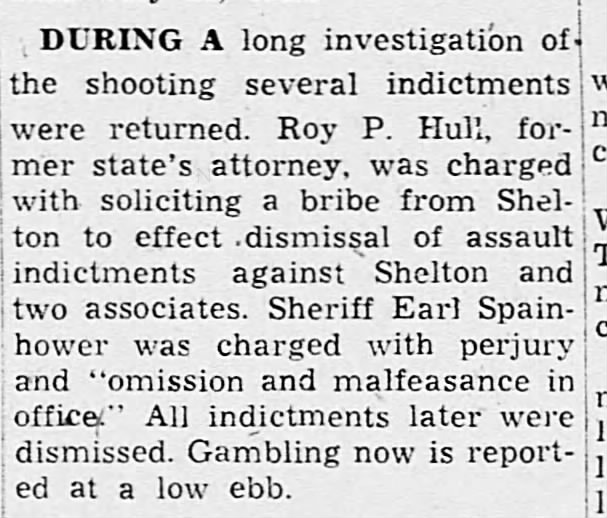
I’ll also be sure to share a video from 2015 of Ruthie Shelton, the grand niece of the Shelton boys.
She grew up having no idea who her family was until she was a grown adult, and once she found out, she learned all she could.
Roy P. Hull died in 1981 at 84 years old. This episode started because of a mending kit printed with the saying, “A stitch in time saves nine.” Basically, catch the snag now before it becomes a big hole you can’t fix or get out of.
Thank you for joining me as I shared a snippet of the past. I’d love to know if it connected with you in some way. Did it spark a memory or make you see something differently? If so, consider sharing it. Be sure to check out the show notes for additional info, links, and ways to connect. It’s not nostalgia, it’s human.
Until next time, may you find something worth holding on to
Thank you for coming along with me & if interested, consider signing up for the Newsletter.
DISCLAIMER: The content on this site is for storytelling purposes only.
ADDITIONAL LINKS & INFO:
Various sites on the Shelton Gang:
- Peoria & The Shelton Gang
- Peoria Public Library – A Shelton Chronicle
- See Something, Don’t Say Something
- ‘Mob princess’ tells tales of notorious Shelton gang
pinny please