Hey everybody, welcome to Retell Seller, an ephemera podcast where I uncover forgotten stories and the ephemera people leave behind. I’m Angie, a reseller of 10 years, and I’ll share one of those snippets with you. Let’s see what today’s find has to say
Please know some links in this post are affiliate links. If you click on a link and make a purchase, I may receive a small commission with no extra cost to you. Thank you. Click here for my full disclosure.
This is part two of the 1950s wildlife and nature postcards episode. Uh, if you missed part one, I’ll leave the link in the show notes. And you don’t have to listen to the first one first and the second one second. It was not due to needing to be in any type of order. It was just based on the amount of postcards I had.
So the first one we will talk about today is the yellow lady’s slipper, Cypripedium calceolus pubescens, Category is Wildflower-10, 1957.
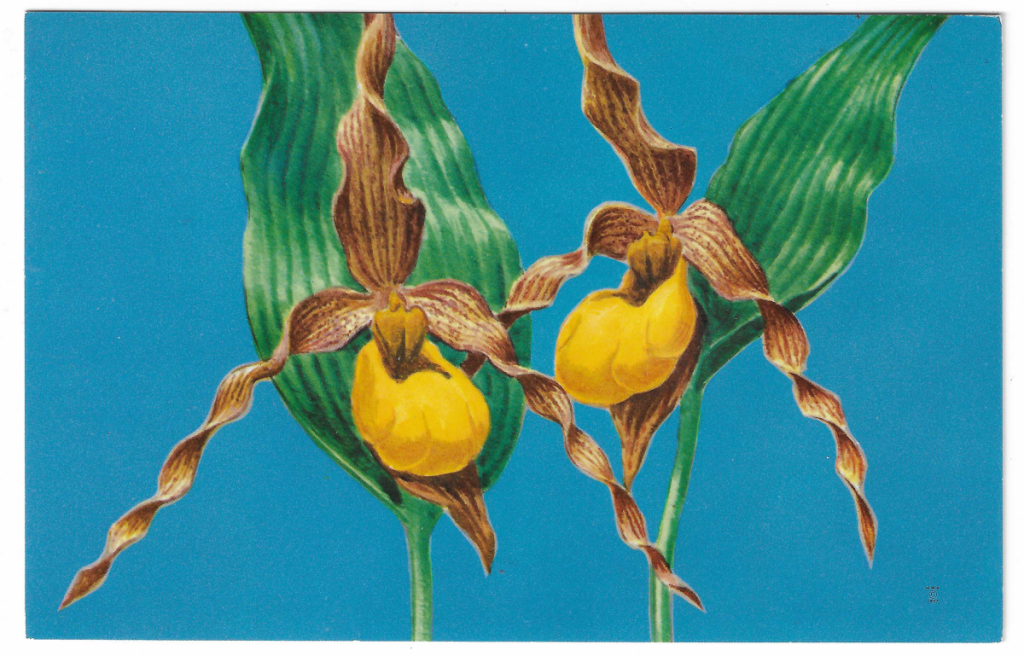
The description says, “Names like golden slipper, whip-poor-will’s shoe, and shoe of the virgin tell us of the general interest in this attractive plant which flowers in dry to moist rich woodlands from April through June. 32 inches high, two-inch slipper.”
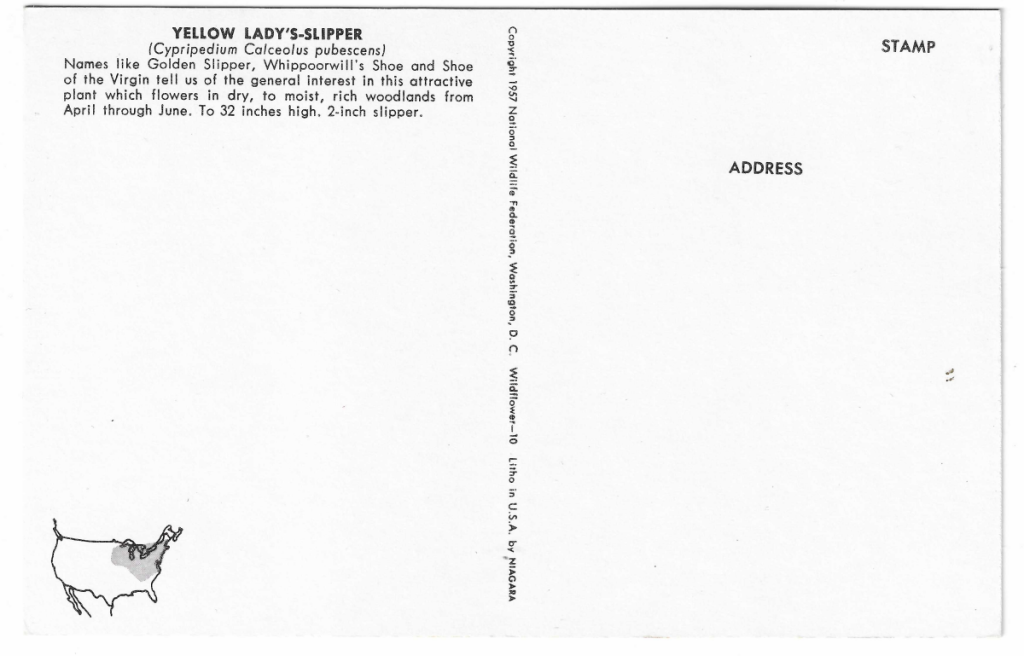
The shaded area on the card stating where they’re known to be says mainly the upper Midwest and eastern side of the US.
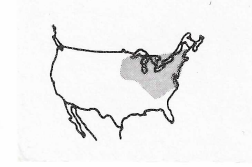
But Wikipedia states it’s widespread going from Alaska to Arizona and Georgia. I’m wondering if it’s just been found as being in other areas since the making of these cards. I don’t know.
There was no artist attribution. However, I found another postcard with this exact artwork for sale on eBay. That postcard was dated 1949 and has the artist’s name of W.A. Weber printed on the image’s side.
I recognized the name from some of the other postcards I have which his signature is on. So I’ll go through his first.
Next is the Wolverine, Gulo luscus, listed as a mammal-11, dated 1958.
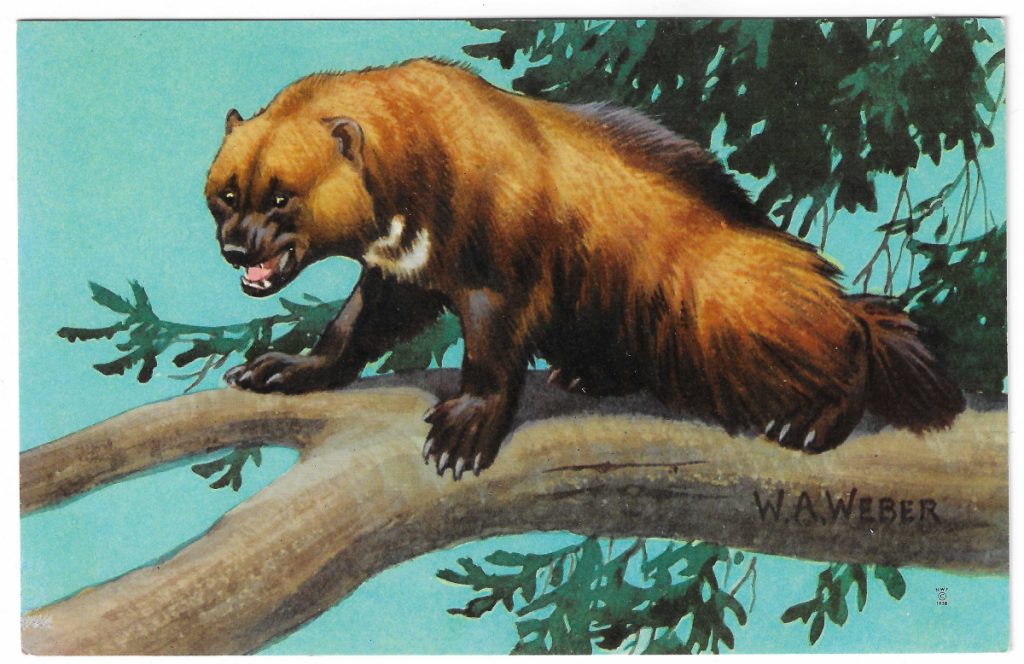
It reads: “This very large weasel of the North Woods and the Arctic looks more like a small bear and may weigh up to thirty-five pounds. It can be distinguished from its northern relative, the Fisher, by broad yellowish stripes which join across its rump.”
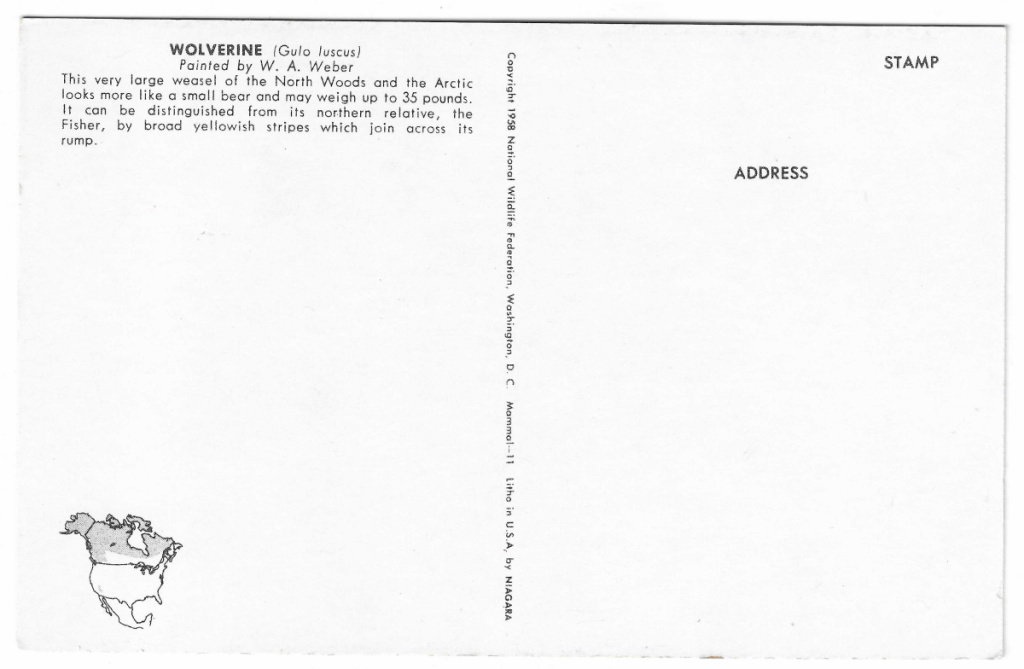
The shaded area on this card shows it’s found in the northern United States, Alaska, Canada. I found out in 2024 it was approved to bring wolverines back into the state of Colorado. A plan was created, But they were also aware it’s never been done before. Uh, so in early 2026 they’d planned on releasing a certain number over a three-year period, but it looks like it’s now slated for 2027.
When I saw the wolverine was compared to a Fisher, I knew I also had a card with a Fisher on it, but it was signed by Al Kreml. So I look up Al Kreml, and at first I didn’t find anything, and AI says there’s no such person.
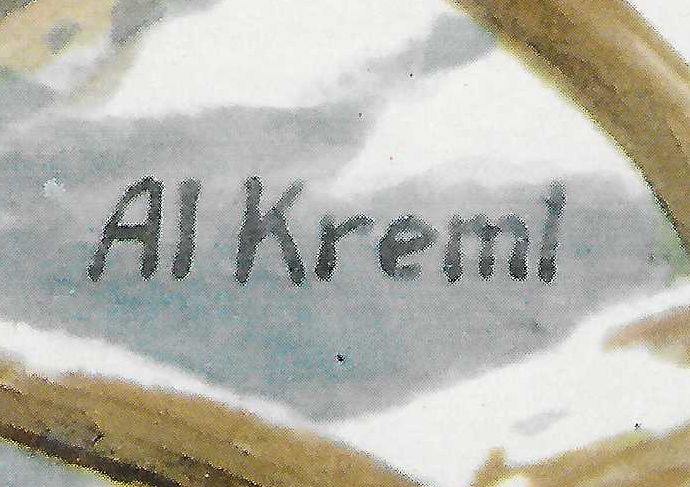
So I tack on National Wildlife Federation and I see the Wikipedia for W.A. Weber, who painted the two images we just talked about. So Al Kreml was his pseudonym.
So next is the Fisher, Martes pennanti, listed as Mammal-10, dated 1958,
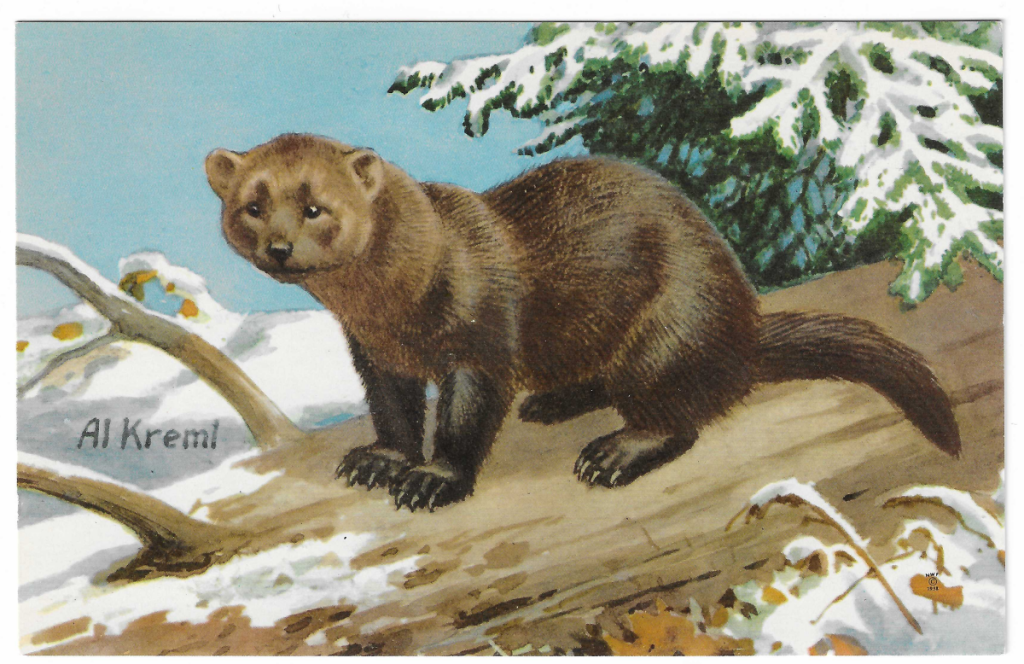
Described as “A large member of the weasel family. This skilled hunter, which weighs as much as 10 pounds, is more at home in trees than on the ground. Its home is the cold northern woodlands. The fisher’s fine black fur often has a frosted look.”
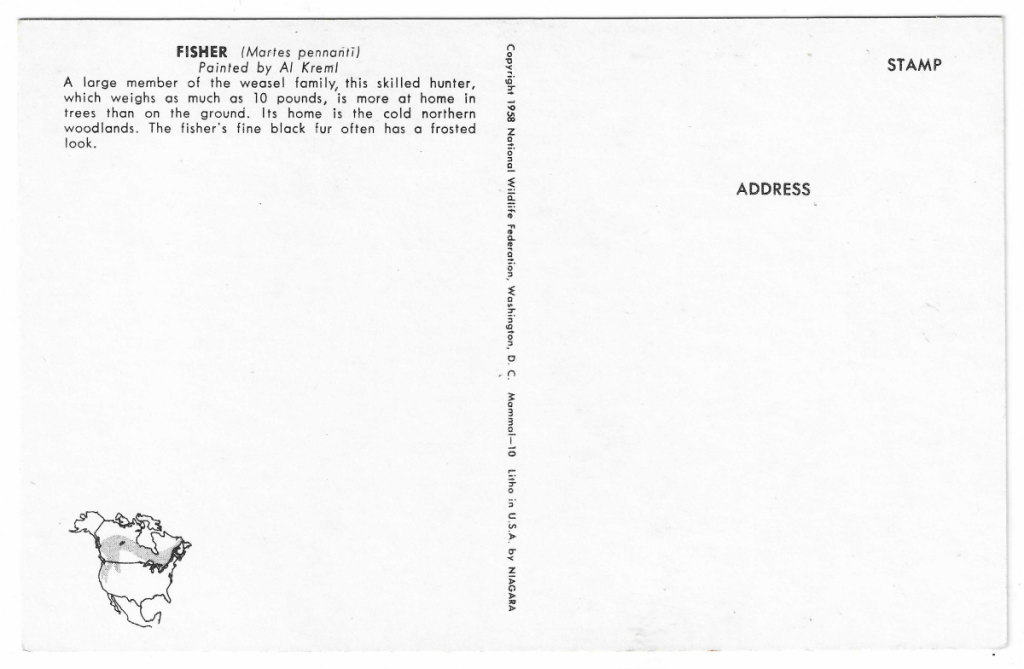
In 1771, Thomas Pennant described the Fisher without realizing someone else had already described it. There would be others down the line who gave their own descriptions and various names, and Wikipedia states that by 2008, due to all of the advances in DNA allowing for a more in-depth study of the history of the Fisher’s evolution, saying it was distinct enough to put it in its own genus. They created Pecania, and it was reclassified as Pecania pennanti.
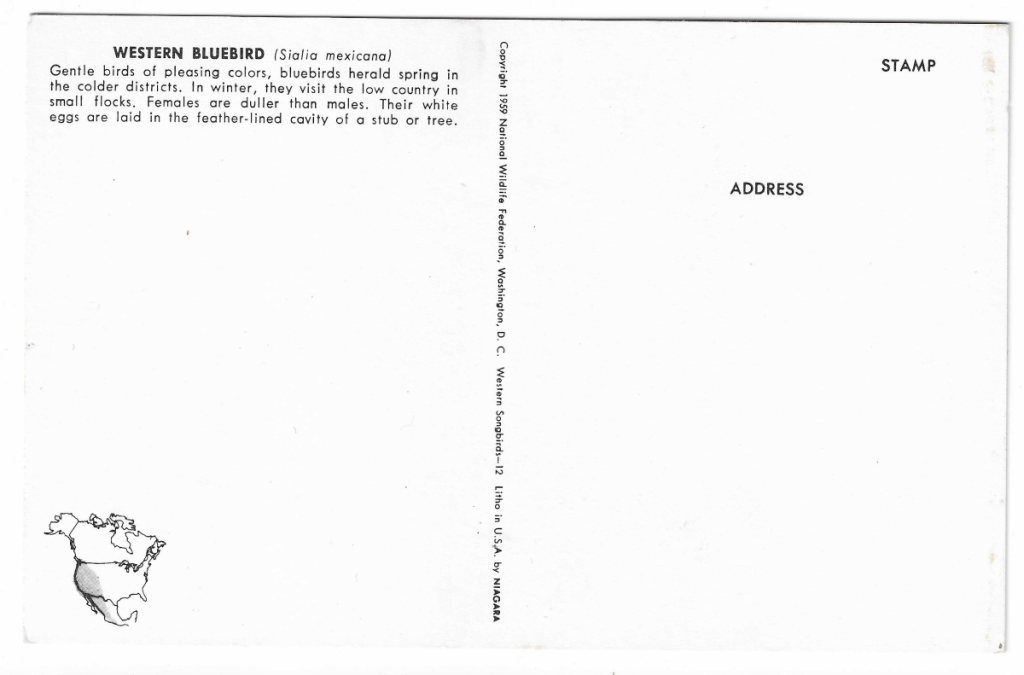
The final artwork by W.A. Weber is the Western Bluebird, Sialia mexicana, Western Songbird-12, 1959.
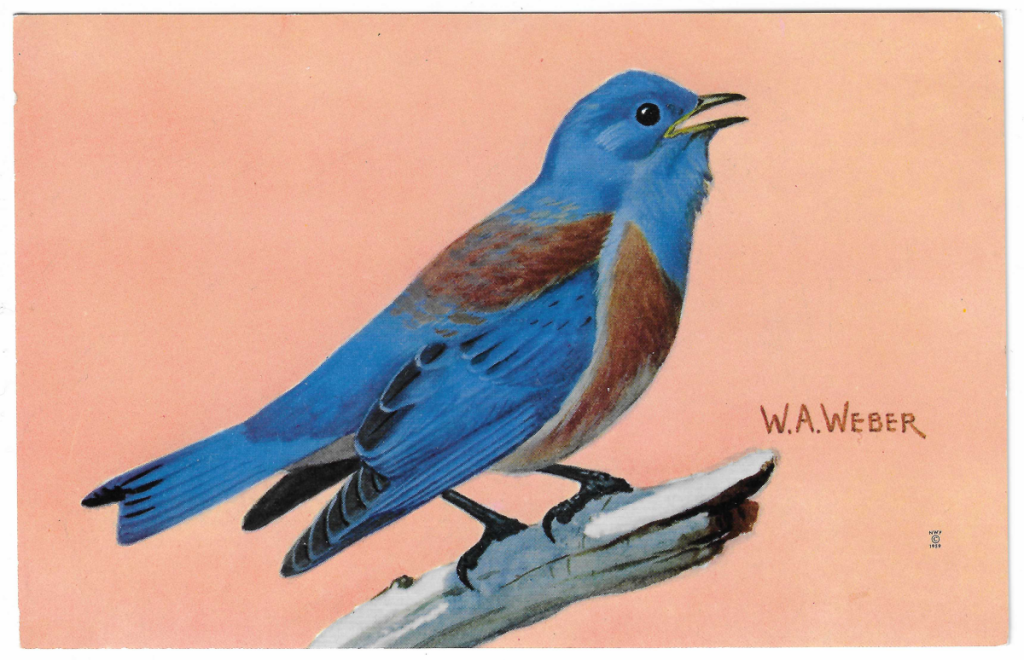
It’s described as, “Gentle birds of pleasing colors, bluebirds herald spring in the colder districts. In winter, they visit the low country in small flocks. Females are duller than males. Their white eggs are laid in the feather-lined cavity of a stub or a tree.”
And here’s a snippet of how one sounds:
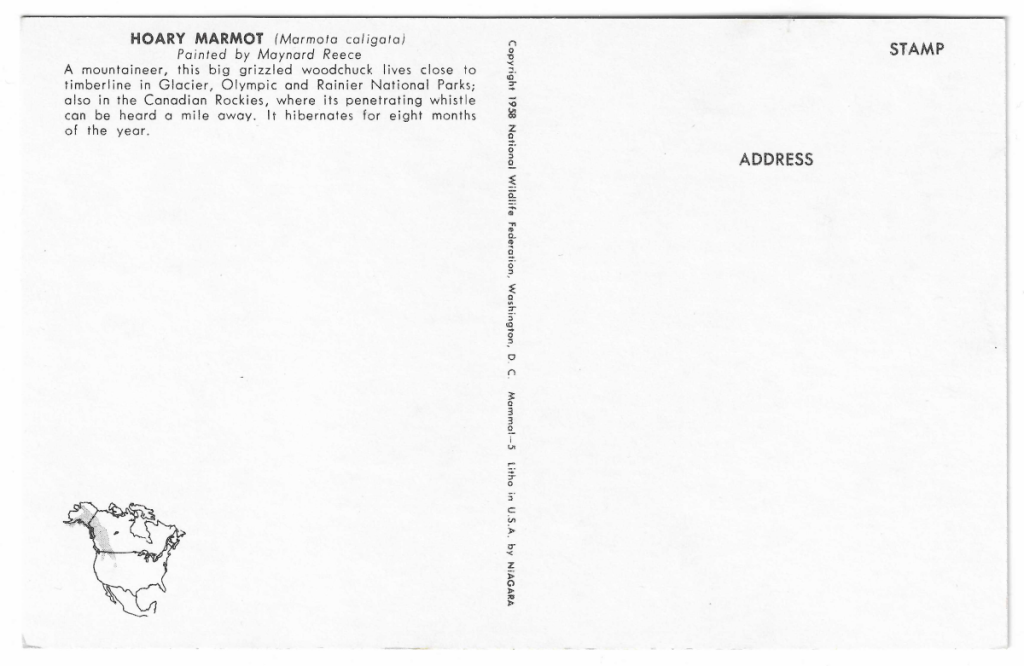
Now we have the Hoary Marmot, Marmota caligata, painted by Maynard Reece. Mammal-5 1958.
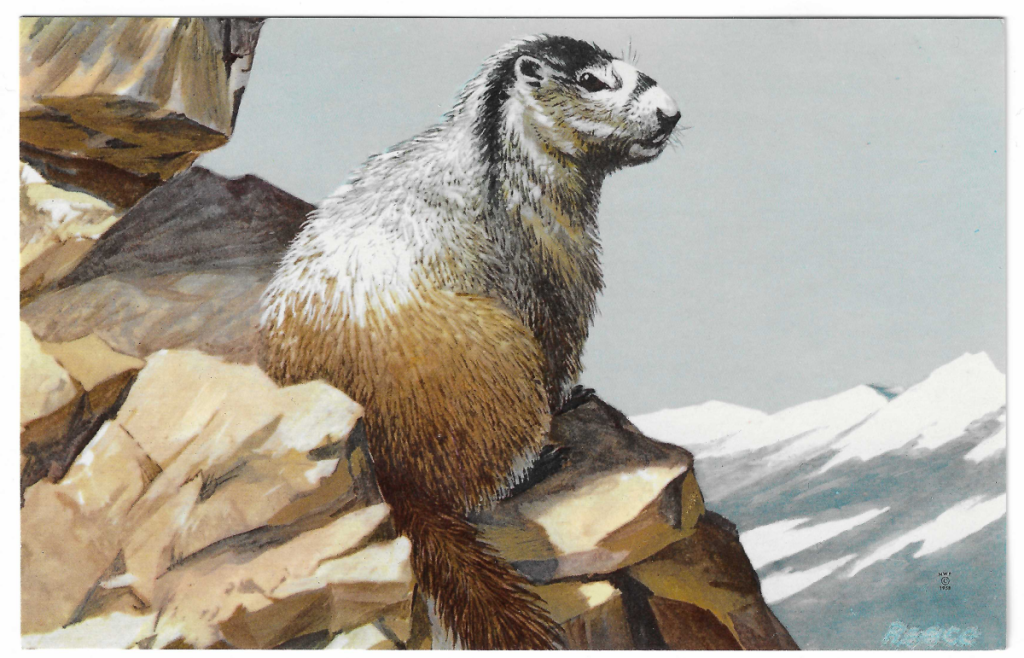
This one says, a mountaineer, this big grizzled woodchuck lives close to timberline in Glacier, Olympic, and Rainier National Parks, also in the Canadian Rockies, where its penetrating whistle can be heard a mile away. It hibernates for eight months of the year.”
The hoary marmot is a ground squirrel, basically, the largest in North America. And since they hibernate for so long, they live off of their fat reserves, so their weight fluctuates. But the largest size was found to be 30 pounds. They’re also known to be called whistle pigs since that’s what they do when they’re alerting others of danger.
The painter Maynard Reece won the Federal Duck Stamp competition in 1948, 1951, ’59, ’69, and ’71. And the stamp is not for sending postcards or letters. It’s required if you plan to hunt for waterfowl. It also gets you into National Wildlife Refuges
Next is the Mariposa lily, Calichortus venustus, Wildflower -9, 1957. No artist attribution.
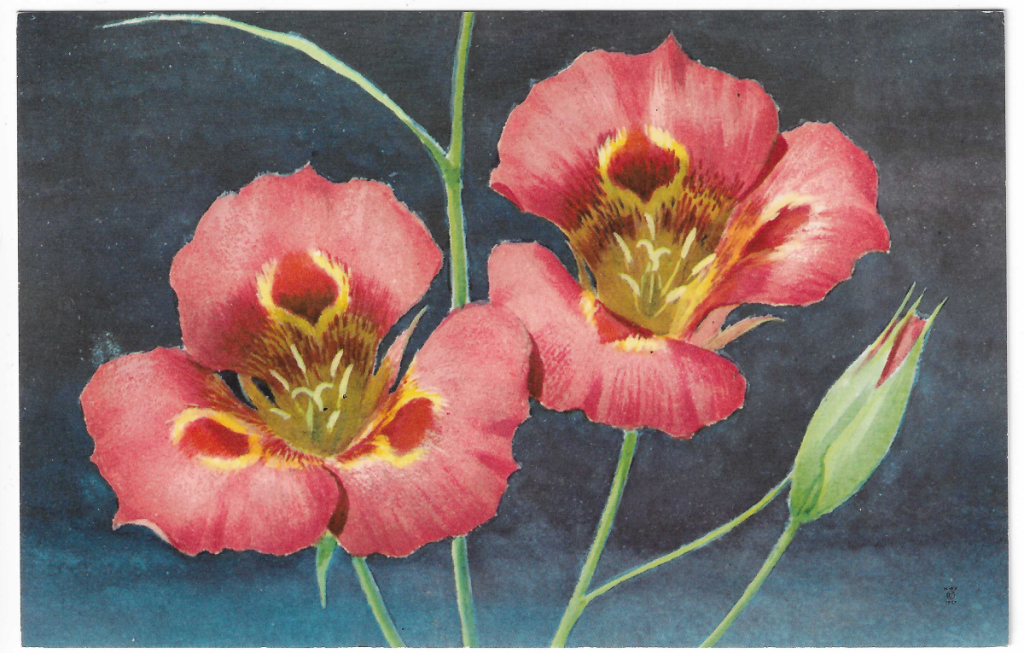
The card says, “With yellow lilac purple to reddish flowers to four inches wide on slender branched stems to three feet high, these plants are well called butterfly tulips. Edible underground parts may fill stomachs, but flowers fill our souls. Protected by law.”
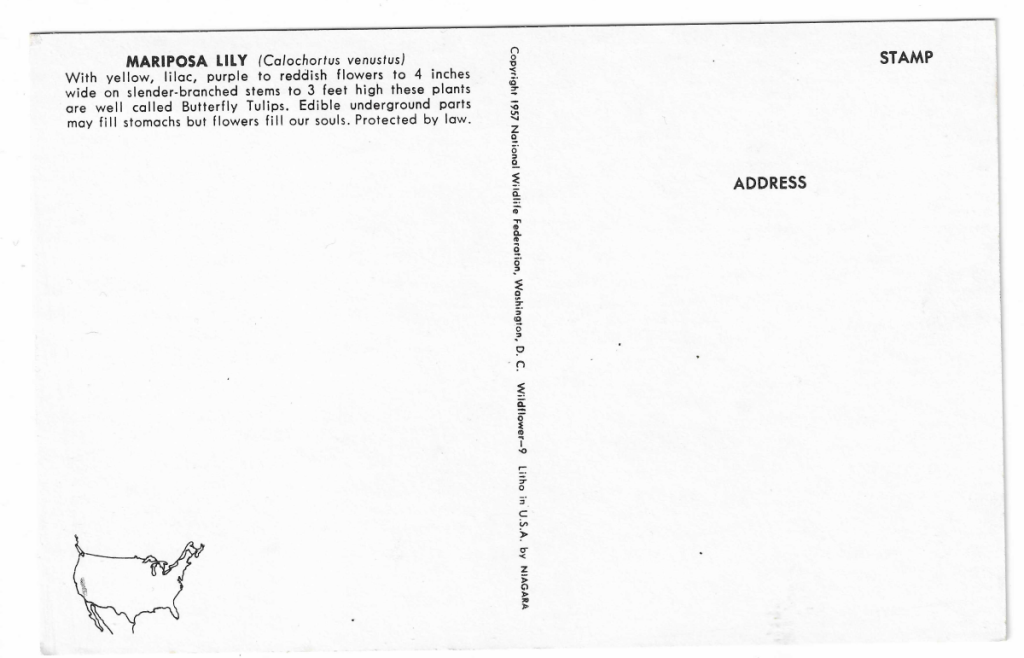
This is a perennial herb, Native and endemic, only in California. Of course, I wanted to know about being protected by law, and I couldn’t find anything on this specifically for this time back in the ’50s, but California’s Department of Fish and Wildlife does have various laws protecting native plants.
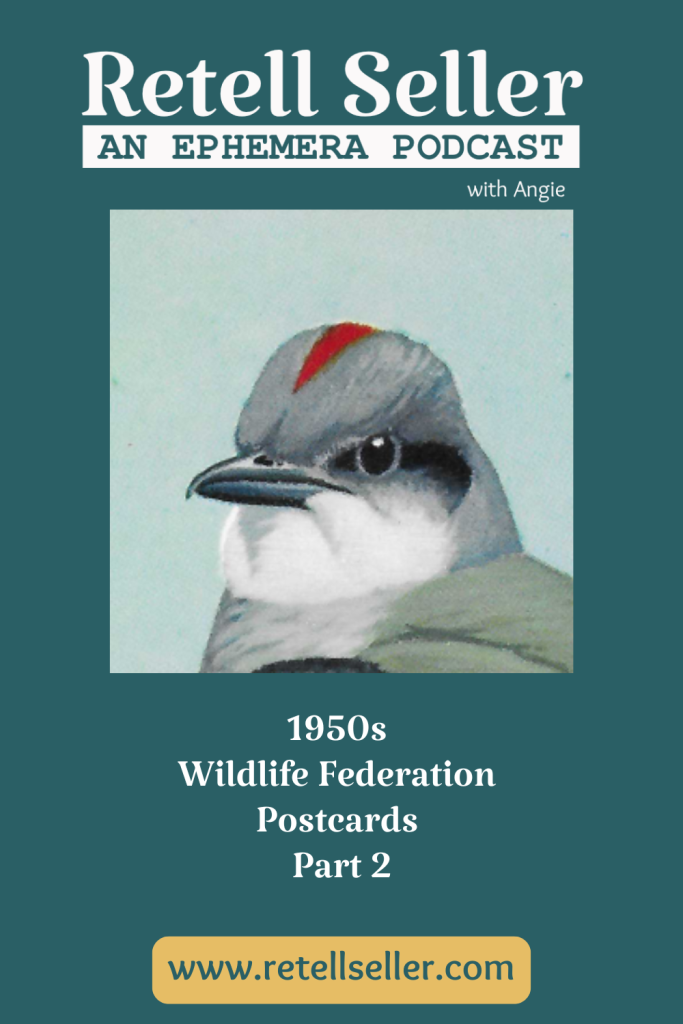
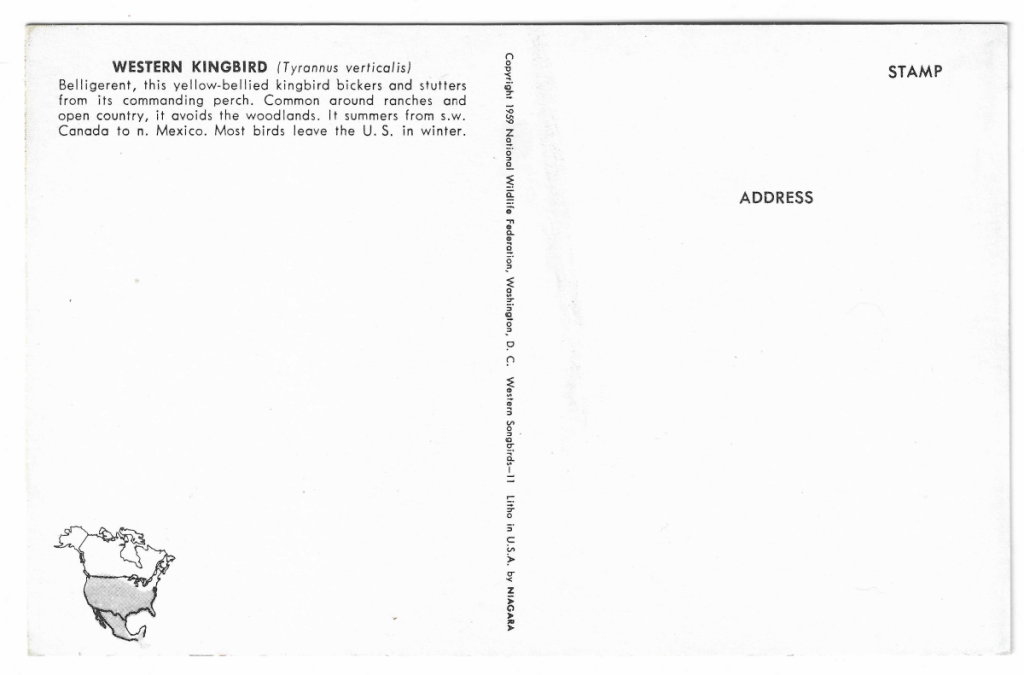
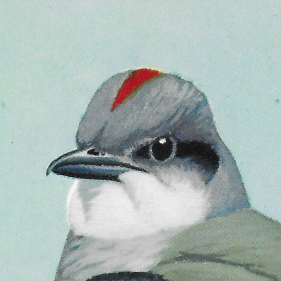
The last card we’ll hear about is the Western Kingbird, Tyrannus verticalis, western songbird-11, 1959.
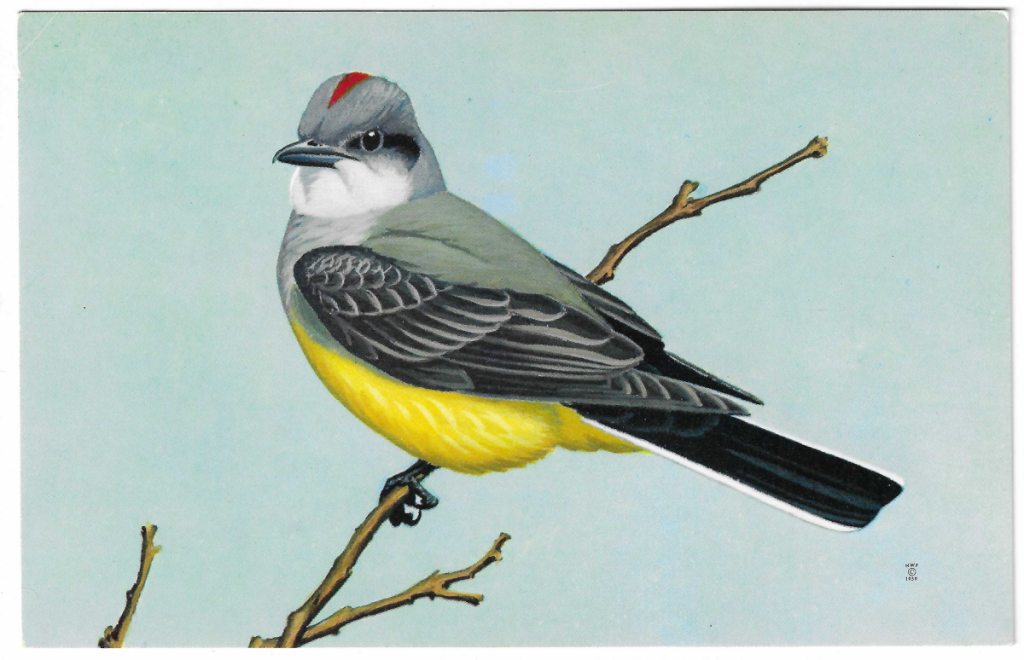
Again, no artist name. Card reads, “Belligerent. This yellow-bellied kingbird bickers and stutters from its commanding perch. Common around ranches and open country, it avoids the woodlands. It summers from southwest Canada to northern Mexico. Most birds leave the US in winter.”
The image on the card I have shows a grayish head and back with black wings and a yellow underbelly.
On the head, there’s a red stripe down the center, and it turns out the red area is usually only seen if the bird is agitated in some way.
Well, that’s all I have for the National Wildlife Postcards.
Also, if you’re into animals and nature too, There are a couple of guys I follow you may be interested in. The first is Rick Schwartz and oh my God, does he have a voice and a personality for it. Uh, his podcast is called Animals, Nature, and You. And the other guy I found through Rick’s social media, uh, his name is Jungle Jordan.
He’s pretty funny and is all about wildlife and encouraging diverse backgrounds to get involved in any way they can. Um, in Rick’s first interview, they actually sat down together and it was a really good podcast
But I was thinking I have always loved animals, insects, reptiles, you name it. I found snakes to be super fascinating when I was really young, living in Texas, uh, we had burglar bars, and there would be one snake or another wrapped around the bars practically all day every day, with the dangerous ones having to be removed.
And any chance I got to hold a snake, though, I was taking it. Even now I take photos of bugs, animals, flowers.
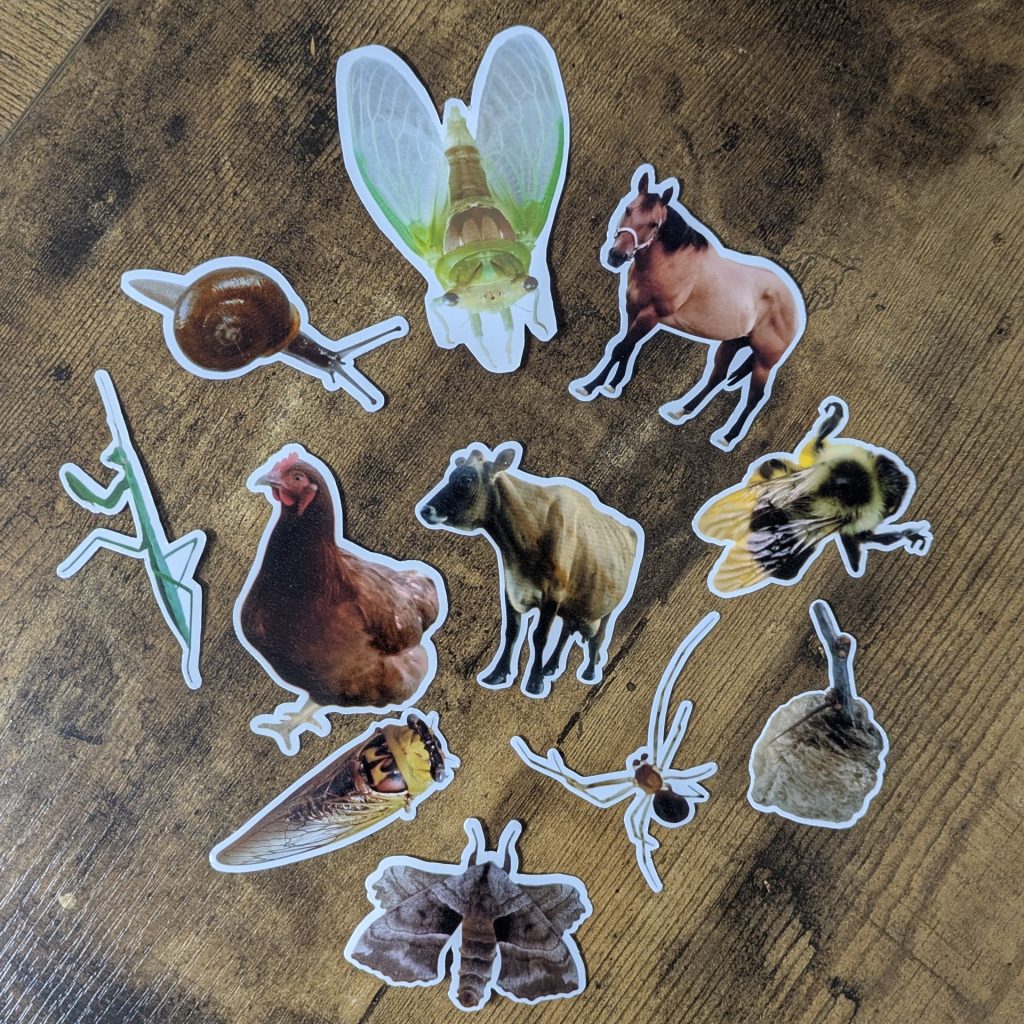
I have a Cricut Maker, which I love, and I’ve turned so many of my photos into digital art and stickers, and my filing cabinets and storage containers are completely covered practically.
I encourage you to check out retellseller.com, that’s R-E-T-E-L-Lseller.com to find all the images and links. You can sign up for the weekly newsletter where I share the most recent episodes and my most recent finds, or just the everyday happenings of life.
Check out YouTube as well, to watch the videos I make to go alongside and don’t forget to subscribe
Thank you for joining me as I shared a snippet of the past. I’d love to know if it connected with you in some way. Did it spark a memory or make you see something differently? If so, consider sharing it. Be sure to check out the show notes for additional info, links, and ways to connect. It’s not nostalgia, it’s human.
Until next time, may you find something worth holding onto
Thank you for coming along with me & if interested, consider signing up for the Newsletter.
DISCLAIMER: The content on this site is for storytelling purposes only.
pinny please