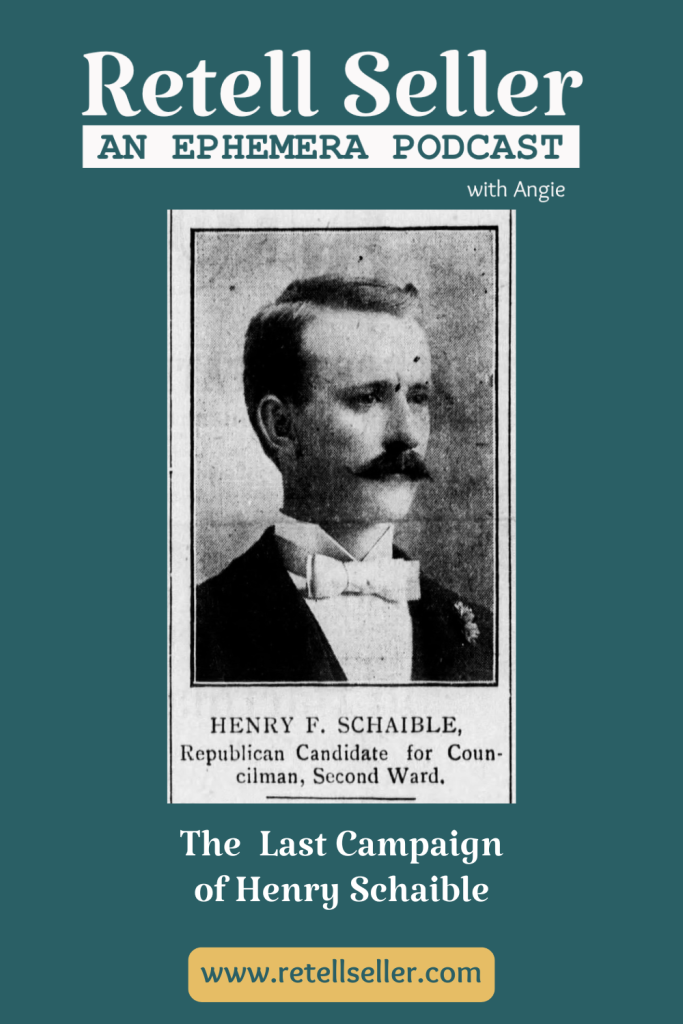
Hey everybody, welcome to Retell Seller, an ephemera podcast where I uncover forgotten stories and the ephemera people leave behind. I’m Angie, a reseller of 10 years, and I’ll share one of those snippets with you. Let’s see what today’s find has to say
Please know some links in this post are affiliate links. If you click on a link and make a purchase, I may receive a small commission with no extra cost to you. Thank you. Click here for my full disclosure.
Today’s find is a thicker card which looks like a large postcard. It’s about six and a quarter by four and a quarter inches. It’s creased, torn, bent, and stained.
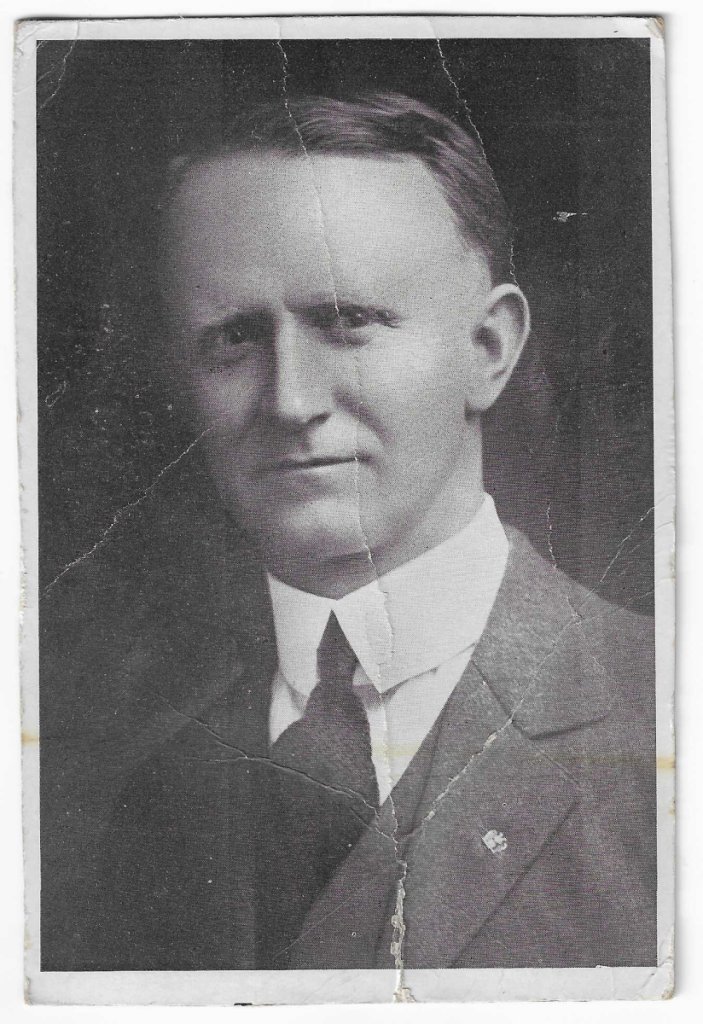
The front image is a black and white photo portrait of a man with short hair wearing a suit and tie with a high collared shirt. It looks like he’s wearing a lapel pin, but I can’t tell what it is.
The other side of the card has a small red, white, and blue American flag sticker in the upper left. The upper right has K.C.K. 7/16/44. It’s handwritten in black ink, which has bled in a few spots.
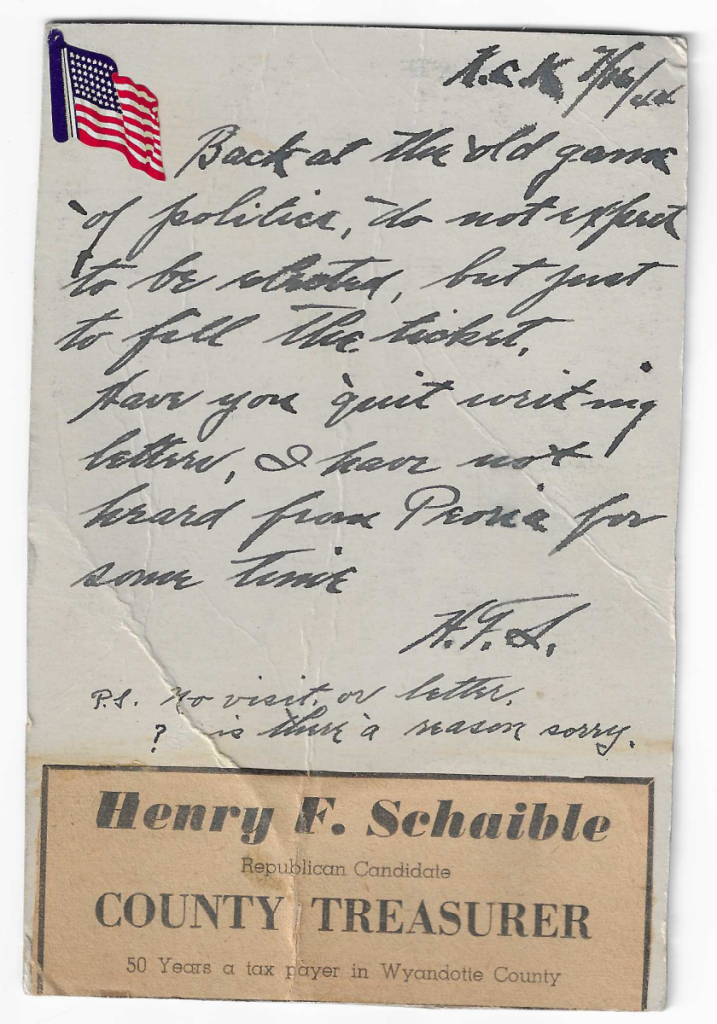
He wrote,
“Back at the old game of politics. Do not expect to be reelected, But just to fill the ticket. Have you quit writing letters? I have not heard from Peoria for some time.
H.F.S.
P.S. No visit or letter. Is there a reason sorry.”
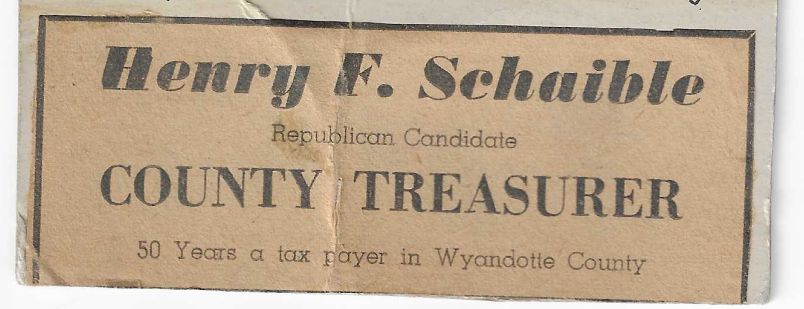
Under his message, he glued a newspaper clipping. It reads,
“Henry F. Schaibel, Republican candidate, county treasurer, fifty years a taxpayer in Wyandotte County.”
He did draw a question mark around the PS area, but he didn’t attach it to the end of the question, “Is there a reason?” It’s near the message, but also kind of by itself, and it gave me the thought he was just stumped as to why he hadn’t heard from them.

There’s no information as far as the recipient, and while the card looks like an over-sized postcard, it wasn’t addressed to anyone. There’s no address, no postmark.
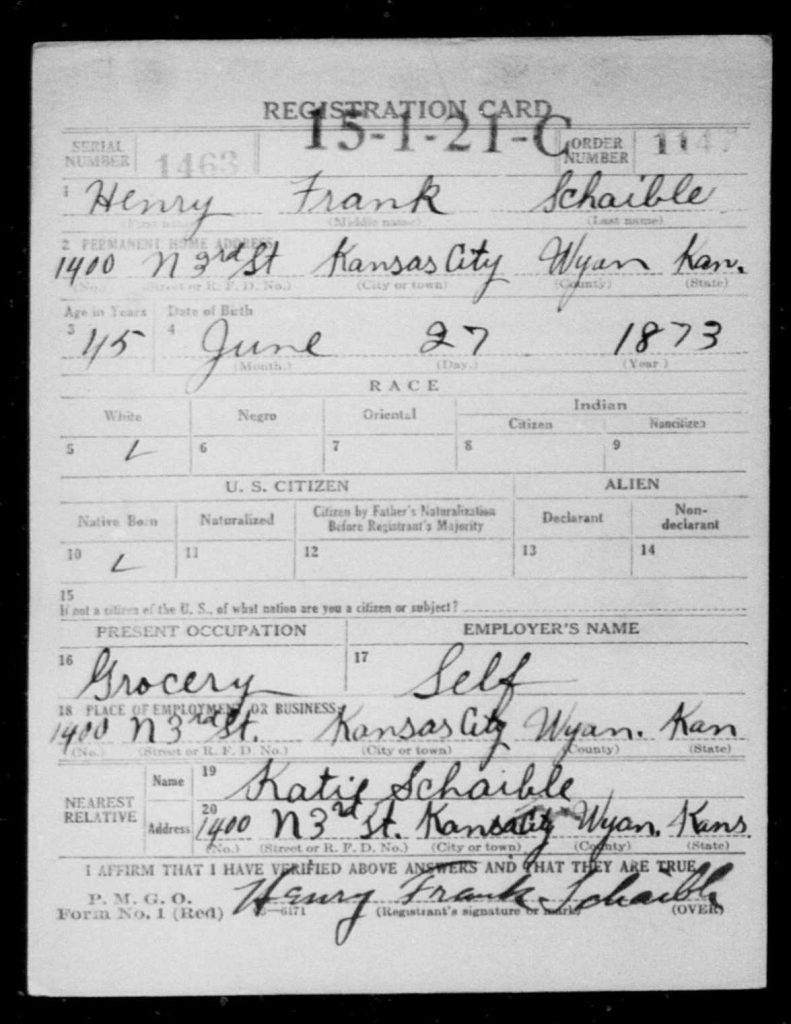
After some digging and a bit of confusion at times, I found the correct Henry F. Schaibel I was looking for.
He was born June 27, 1873, married with two boys. While he lived in Kansas, he was from Wisconsin. I never find things in order, and this was no different.
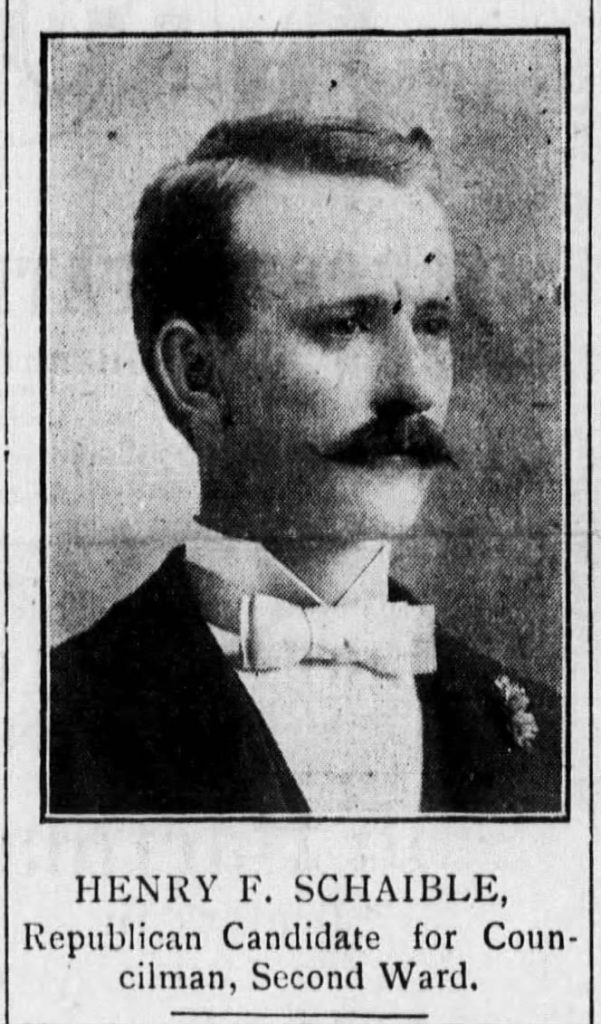
In the midst of searching and saving articles, I found the very photo of Henry F. Schaibel that’s on the card, which really just made my day to know that I had the right guy. I’d continued to see it multiple times in the papers associated with various stories.

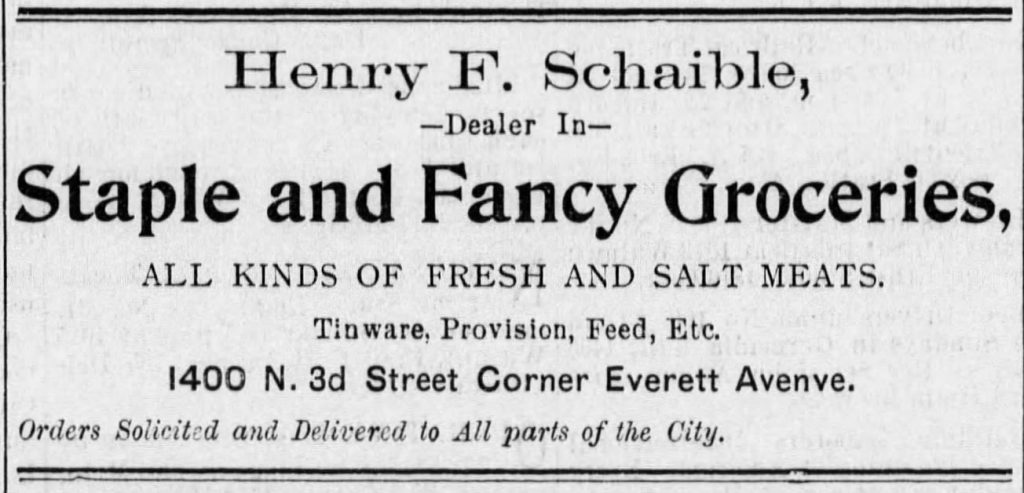
As early as 1896, articles talk about how he owned and ran a grocery store. One ad says, “Henry F. Schaibel, dealer in staple and fancy groceries, all kinds of fresh and salt meats, tinware, provision, feed, Orders solicited and delivered to all parts of the city.”
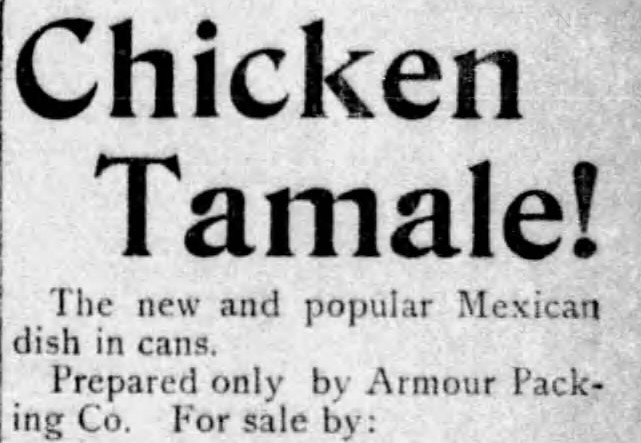
Another talks of how the new and popular canned chicken tamales by Armor Packaging were sold by stores including Henry’s.
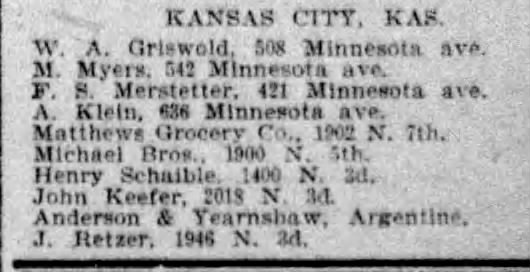
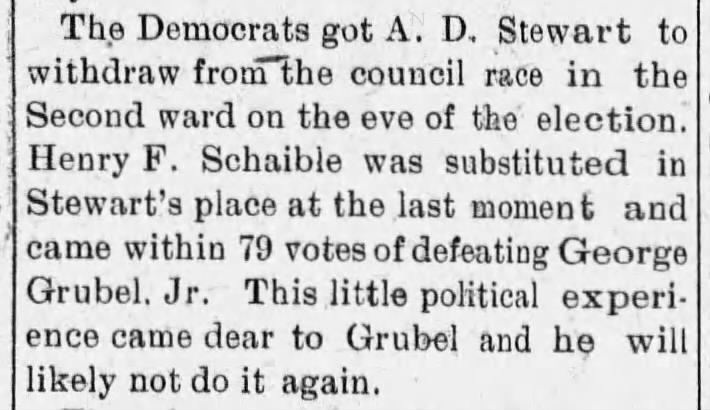
By 1902, Schaibel’s name begins appearing for a different reason. One article says he was chosen to be the Republican candidate for the Second Ward council seat only hours before the polls opened after the chosen primary candidate withdrew. And even with such short notice and no time to campaign, he lost by fewer than 80 votes.
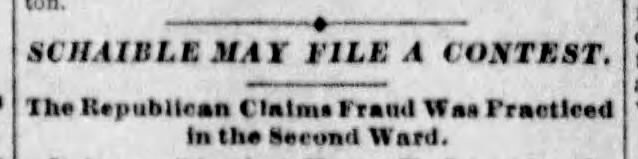
Another article reported he was considering contesting those results, alleging irregularities in the vote counts. He believed the numbers reported to the city clerk didn’t match what had been counted originally.
I didn’t find an article addressing if there was any follow-through to the claims.
He’d been running his grocery business for eight years by the time he was 29 years old, and he was becoming trusted, making friends, And supporting organized labor. Since he’d come so close to winning the previous election with only hours notice, he thought he’d have a chance to do more, so he became a Republican candidate for councilman second ward, and by 1906, he got it.
Around this time, he’d written an open letter to the president of the Mercantile Club arguing the city’s fire department was suffering because of politics. He was arguing every time a new political party would come into leadership, the current firemen were losing their jobs regardless of how good they were.
The ones with potential could never stay in their jobs long enough to gain the experience needed to do their jobs, and the good ones always ran the risk of being removed for no other reason than politics.
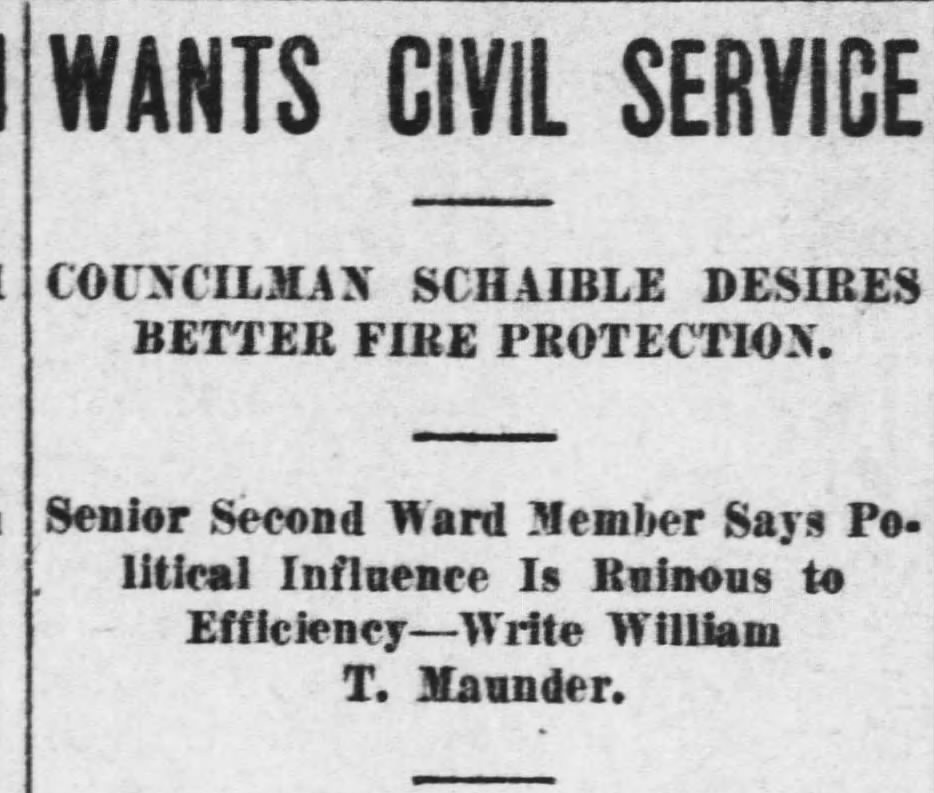
He pushed for reform to ensure the best qualified remained in their positions instead of being based on party loyalty.
When Democratic Mayor William Rose voted to confirm AJ Hoffman as assessor based on the experience Hoffman had, Schaibel broke party ties voting to confirm him.
During Christmas of 1907, Henry had an order of tons of meat brought in by a four-horse wagon, which definitely drew attention as it rolled through town.
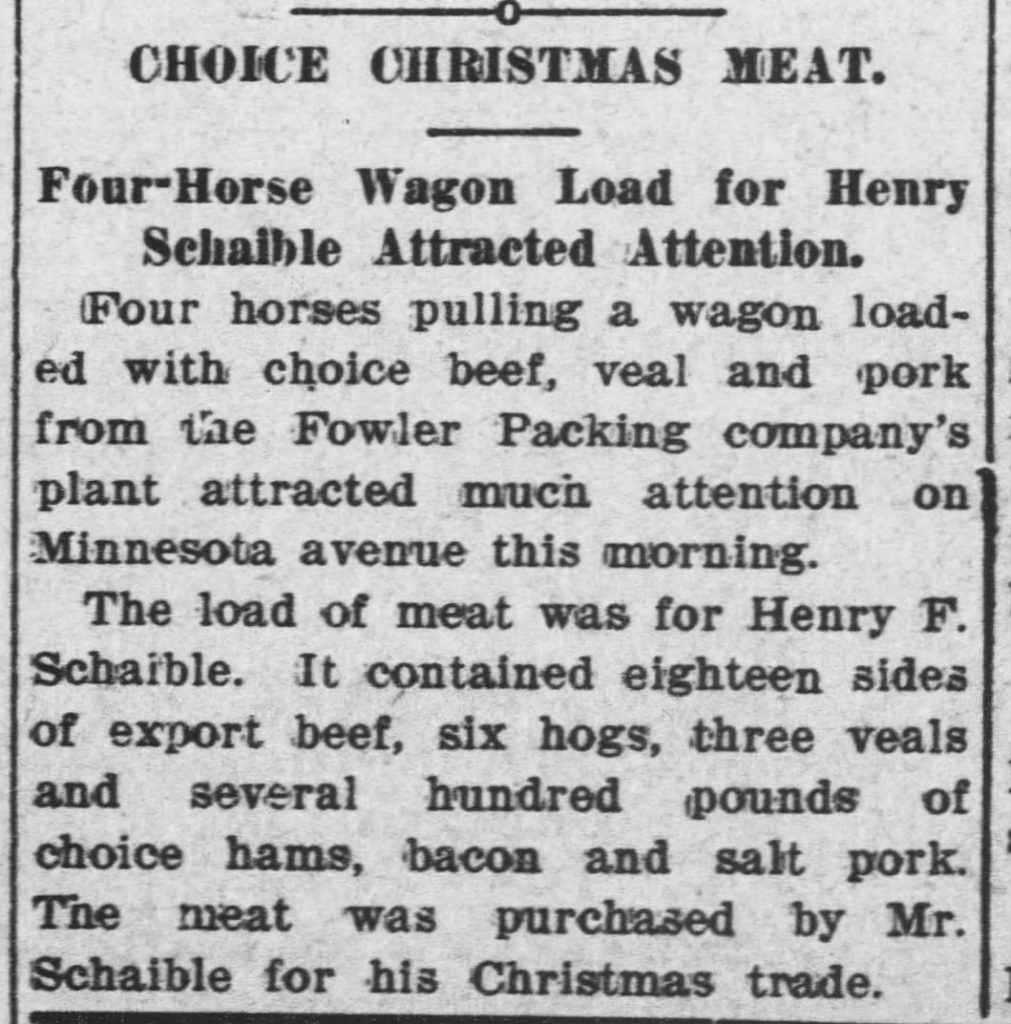
He was filling his store with inventory for Christmas, and the advertisement basically told everyone what was going to be put out into the store. It said 18 sides of export beef, six hogs, three veals, and several hundred pounds of choice hams, bacon, and salt pork.
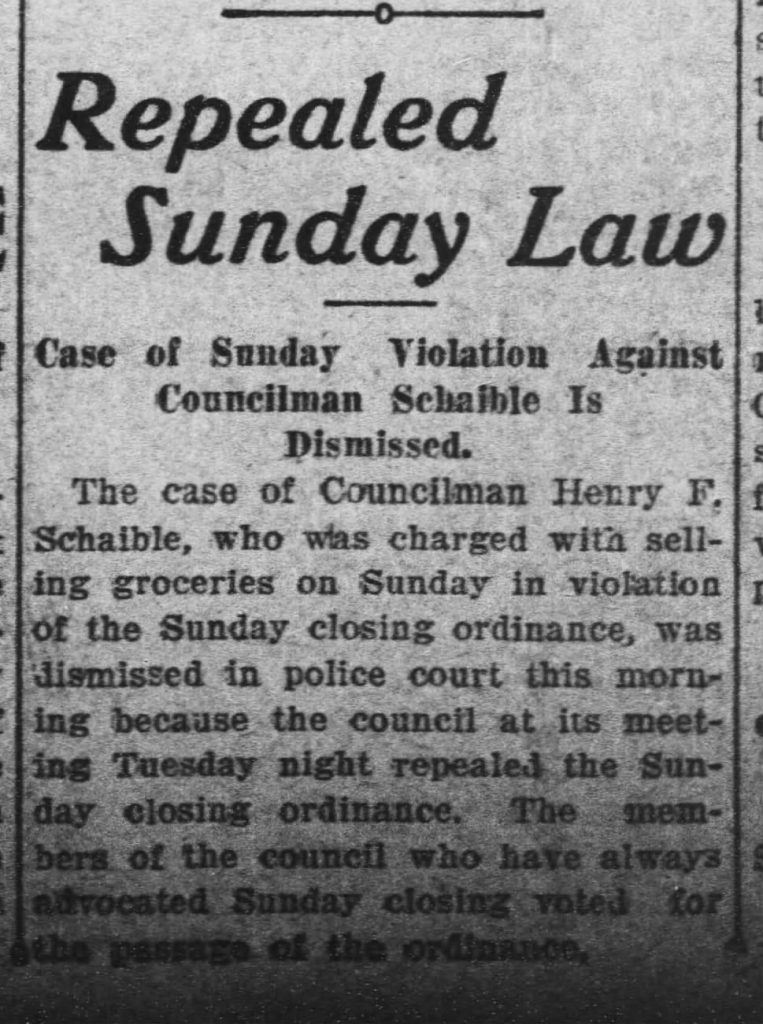
But Christmas passes, and in March of the following year, Henry ends up being charged with selling groceries on Sunday. It was a violation of the Sunday closing ordinance, and the council members who advocated for the closing ended up repealing it.
Throughout his time running the grocery store, Schaibel also served on several committees, including streets and grades. Newspapers credited him with helping improve city streets while protecting taxpayers from unnecessary expenses. It was a record he took pride in and one supporters often pointed to throughout his political career.
By the time he was in his mid-30s, Henry had decided he was not going to run for a fourth term as councilman of the Second Ward. However, his friends encouraged him to run again. He’d built up a reputation for wanting the best for his city and the people in it.
In 1910, Henry entered the race for county commissioner. Newspaper coverage had started to shift, with some articles being more critical of his record. One article focused on his position in the waterworks debate with Councilman Samuel Clark. Schaibel had supported renewing the private franchise, while Clark favored municipal ownership.
After municipal ownership proved successful, the article suggests voters would be more likely to support Clark than Schaibel. The very same day, an article was posted talking about how Henry was behind on his own county taxes from 1908 and 1909. The article ended saying,
“This statement is made not to defeat Mr. Schaibel, but to shut off any scattering votes intended for him.” So they’re just saying, “We’re not attacking him because we think he’ll win. We’re just putting this out there so you don’t waste your votes on him.”

Four years later, in 1914, an article says, “Henry Schaibel has rolled up his sleeves and pulled down his vest, determined to go into the race for county commissioner to win. Schaibel knows every man, woman and child in his district.”
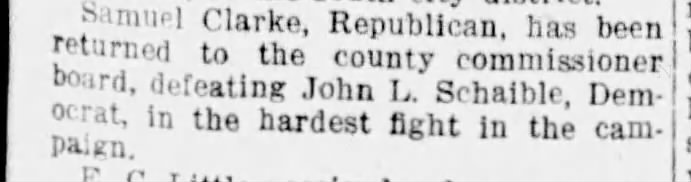
However, also in 1914, I came across another Schaibel, John L. Schaibel. According to this article, John was a Democrat and ran in the primaries where he won and would be up against Sam Clark, who had won the Republican vote, so he beat Henry in that vote.
Instead of just being a simple story of how two brothers happened to both run for various offices on two different sides of the aisle, I found there was an attempt to help John Schaibel in his race for county commissioner, and an underhanded one at that.
There were flyers, or what the newspaper called “dodgers”, released anonymously announcing TJ Lyons and JB Hipple, who were backing Sam Clark, were letting everyone know there’d be “Free beer drinking every evening until election. For particulars, call Sam Clark.”
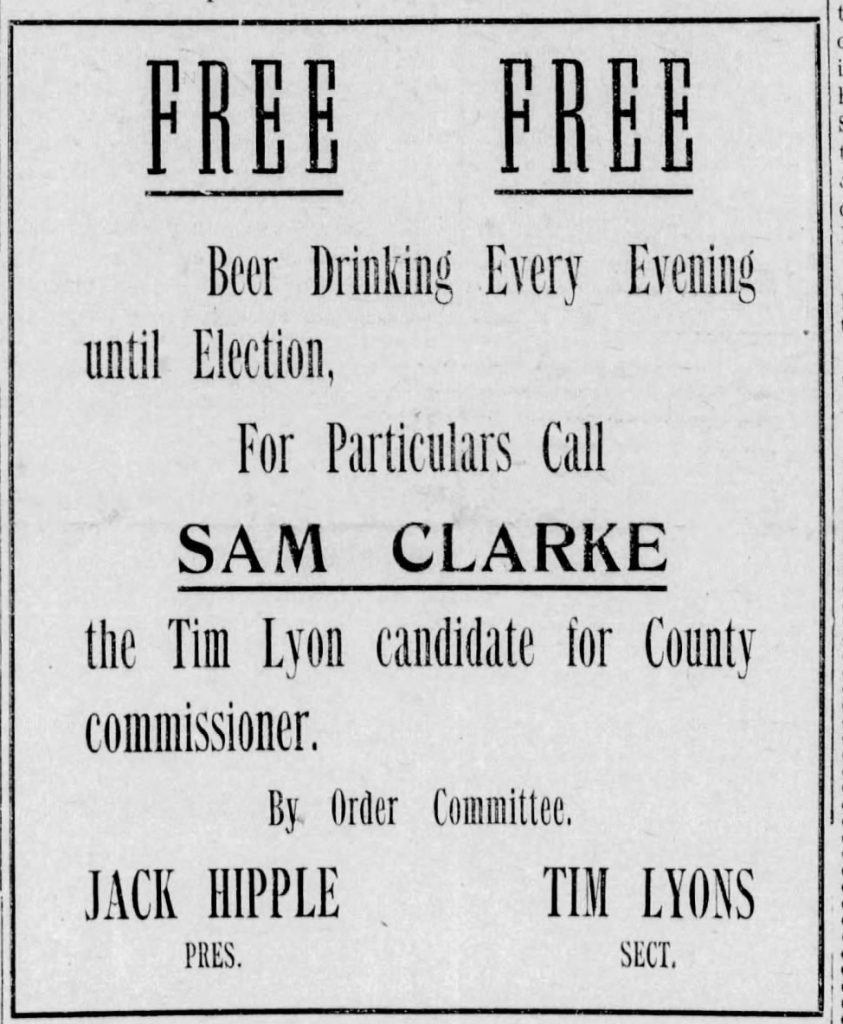
Once the pamphlets were out and in the hands of people, everyone wanted to know who was behind it.
A young man, John Huldeen, only 19 years old, ended up coming forward, telling police he’d been approached by Henry Schaibel asking him to print the flyers, with Henry saying, “Don’t tell anyone.”
Huldeen told the police Lyons and Hipple had nothing to do with it. One article said, “A test case of the law passed by the last Kansas Legislature making it a misdemeanor to publish or circulate an unsigned political handbill reflecting on a candidate may result from a statement signed by John Huldeen Jr.”
So the law had been drawn up just a year before, so this would be the first time using it if they followed through with it, which I did not find a conclusion as to any punishment received, but Sam Clark did end up winning.
If you can believe it, John Schaibel ran again against Clark in 1916. He lost, and as a result, John West, another store owner, removed the pictures he had of John, and the paper reported, “The front of the meat shop looks better now.”
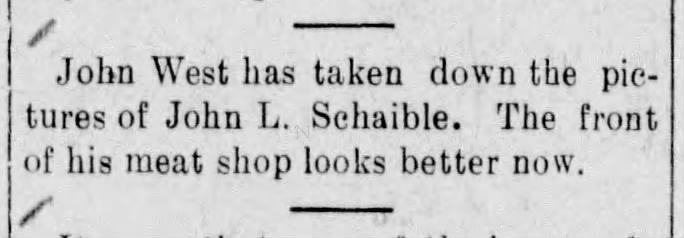
So interesting, isn’t it? what they report on?
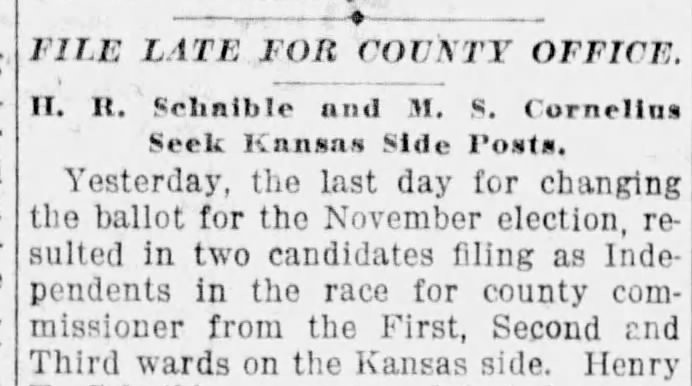
Eight years after the waterworks debate against Sam saw Henry running again for county commissioner against, you guessed it, Sam Clark. Henry was also now filing as an independent since he’d lost to Clark in the primaries.
Now we’re jumping ahead to the 1920s, and not just so I can stop talking about Clark, I swear. But by 1921, Henry is now street commissioner. He won on what he called the “Get It Done” platform.
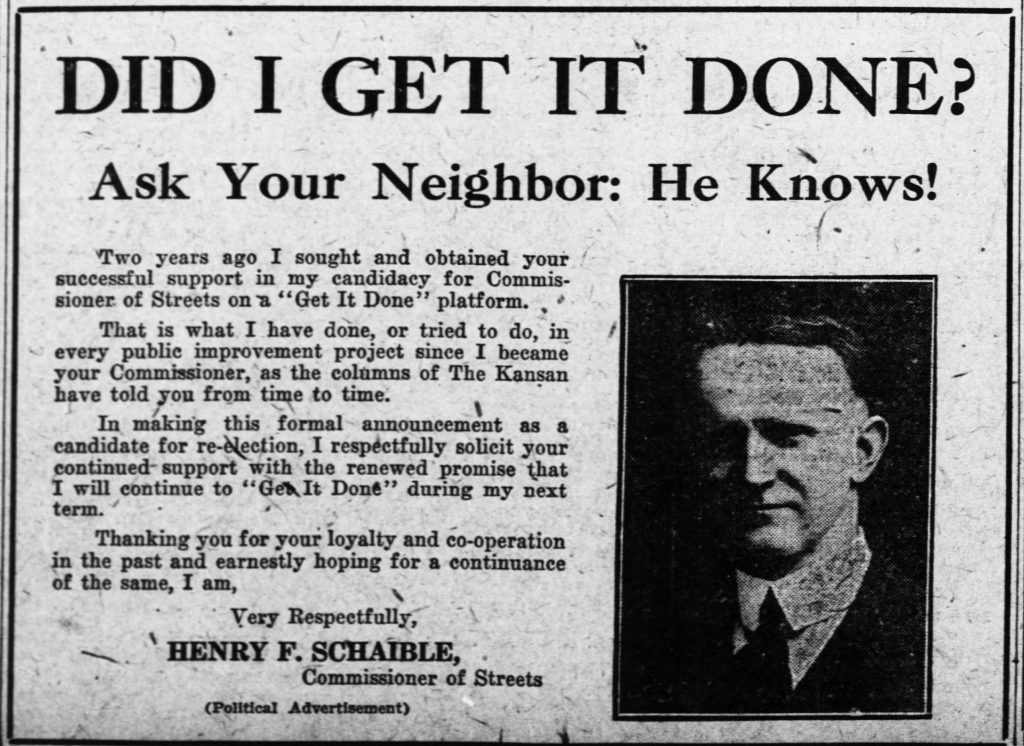
When up for re-election in 1923, he put an ad out reporting that’s exactly what he had done over the last two years and was appealing to everyone for their support so he can continue to get it done.
He won with 15,458 votes over his opponent’s 4,895. Around this time, a snippet in the paper called Around Town had a bit about Schaibel, being a grocery store owner, had carried many people on his books during hard times, ensuring everyone always had something to eat, and how those people really showed up for him.
Henry also had a son named Henry C., whom in 1935 worked as a mechanic for the street department. Henry Sr. had to suspend his son for stealing a truck from the department saying, “In suspending my son, I am following the same course I would if it were any other employee of the department. The suspension will be indefinite or until he has proved his innocence of this charge.”
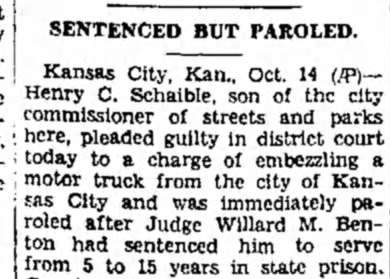
A few months later, Henry C. ended up being sentenced but paroled. The county attorney agreed to the parole saying he thought Schaibel had been punished enough as it was his first offense.
The last time Henry F. Schaibel ran for street and park commissioner was in 1939 against 33-year-old Francis Blake.
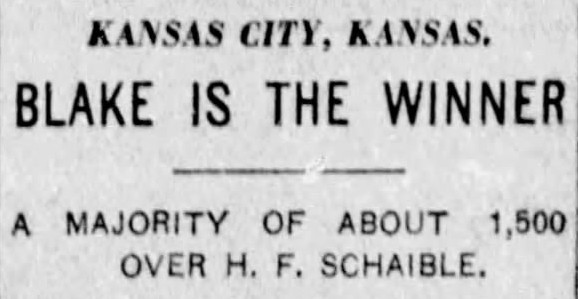
A paper wrote, “Blake was the beneficiary of a trend away from Schaibel indisputably shown in the primaries a week ago, and in the inability of certain groups of civic leaders, both Republican and Democrats, to solidify support for the street commissioner.”
Henry F. Schiable died six years later in 1945 of a heart attack at the age of 72. The announcement highlighted his work saying, “Turning bricks to smooth pavement was his idea and adopted on a wide scale by the WPA.”
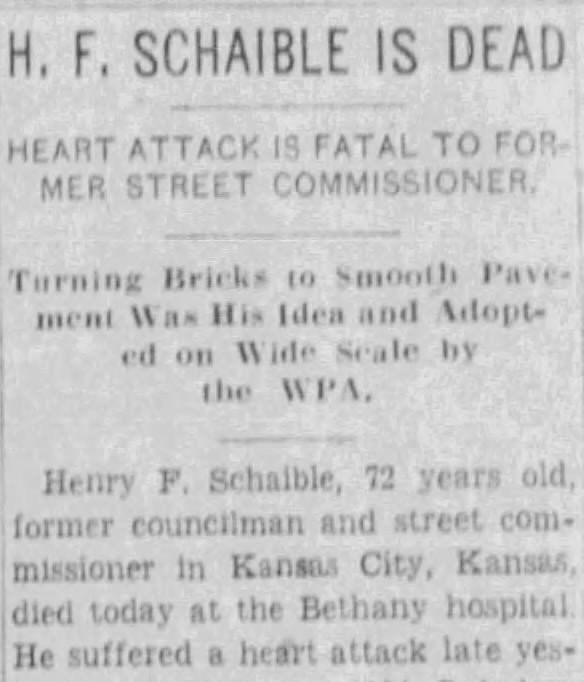
The WPA stood for Work Progress Administration. It was a Depression-era federal government agency providing jobs. One of those jobs meant turning the worn-out bricks on the street upside down to show the smooth side.
There was a time the paper published an article about how Henry was stopped at a red light, and a stranger asked him how to get to Williams Street. Schaibel told the man he couldn’t direct him, but he wanted to help him, so he told him to climb in.
Once they arrived, the stranger said, “Thanks, but why did you feel under obligation to help me find the street?”
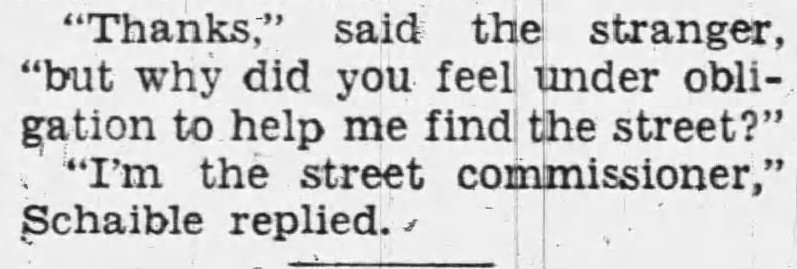
“I’m the street commissioner,” Schaibel replied.
Thank you for joining me as I shared a snippet of the past. I’d love to know if it connected with you in some way. Did it spark a memory or make you see something differently? If so, consider sharing it. Be sure to check out the show notes for additional info, links, and ways to connect. It’s not nostalgia, it’s human.
Until next time, may you find something worth holding onto
Thank you for coming along with me & if interested, consider signing up for the Newsletter.
DISCLAIMER: The content on this site is for storytelling purposes only.
ADDITIONAL LINKS & INFO:
I neglected to mention in this episode Henry was acting mayor for a very short time due to Mayor William. W. Gordon breaking many laws. From spending city money on personal items to not enforcing Prohibitory Law against bootlegging. The website does make you scroll through the dates to read up on each mayor so look for 1923-1926.
https://www.kckpl.org/kansas-collection/kckpl-mayors
I’d found this too about the Municipal Rose Garden. The 1st article I found confirms the garden began with the WPA while Schaible was street commissioner. I found another site saying it’s now called Laura Conyers Smith Municipal Rose Garden. I still need to look this up though to figure it out. I wonder if these are even the same gardens? https://www.kckpl.org/kansas-collection/kckpl-mayor
pinny please